News.Az spoke with Kazakh political analyst Aisulu Rakhmet to gain insight into the evolving dynamics of the Iran–US–Israel conflict and its wider regional implications.
– Following reports of serious strikes on Iran’s missile infrastructure, many analysts are discussing a possible shift in Tehran’s strategy. Do you think Iran could be deliberately provoking deeper escalation in an attempt to draw the US and Israel into a prolonged conflict?
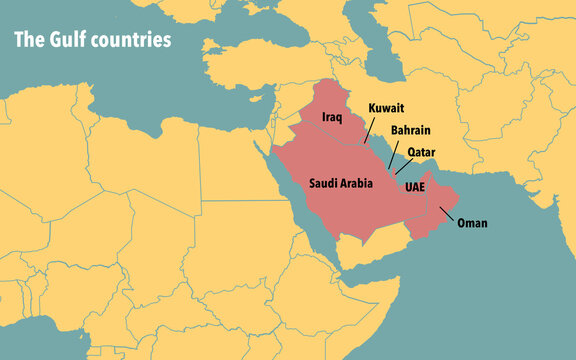
– I believe Iran is unlikely to deliberately seek full escalation for its own sake, but it may be interested in a controlled expansion of the conflict. Tehran is significantly raising the stakes by carrying out regular strikes on oil and gas infrastructure in Persian Gulf countries. QatarEnergy has already suspended gas supplies, even though its facility accounted for 10% of LNG deliveries to the European Union. This, in turn, has dealt a blow to global food security.
Since up to 90% of the cost of nitrogen fertilisers is linked to natural gas, the largest exporters of urea are countries with access to cheap gas resources.
As a result, Middle Eastern countries such as Qatar, Saudi Arabia, Iran and Oman account for around 15% of global urea production, alongside the risks associated with disruption in the Strait of Hormuz. In other words, Iran is deliberately shifting the conflict into the economic sphere — even without considering the situation in the oil market.
Source: Press TV
It seems to me that the logic of the Iranian leadership is that it understands the impossibility of defeating both the “Great” and “Lesser Satans”, as it refers to the US and Israel, but still seeks to inflict as much damage as possible by targeting their allies.
Tehran is trying to make the conflict prolonged, costly and politically toxic for its opponents. Notably, American media and social networks are already sharing footage of funerals of US soldiers killed in the conflict, and there have even been instances of Iraq War veterans publicly protesting against its continuation.
– The expert community is increasingly discussing the hypothetical possibility of a ground operation by the US and Israel against Iran. How realistic is such a scenario from a military and political standpoint?
– In my view, a classical invasion scenario, particularly the occupation of Iran, appears highly unlikely. This is a country with a population of over 90 million, complex mountainous terrain and very high mobilisation potential. For example, even if we compare it with the 2003 invasion of Iraq, which involved around 170,000 US troops, Iran’s military potential is at least comparable, if not greater. It is unclear whether the White House was counting on a Venezuelan-style scenario, but Iran clearly surpasses Venezuela in overall power.
Unlike the regime of Nicolas Maduro, Iran possesses a strong military-industrial complex, missile technologies and significant naval capabilities. The country also has an extensive network of proxy groups across the Middle East. Overall, the Iranian elite perceives the current conflict as existential, and the authorities have little room for retreat — regime change would likely mean imprisonment or death.
Washington and Tel Aviv are, in effect, leaving them with little choice but to continue the war. Therefore, when people speak about a ground scenario today, they are more likely referring to targeted operations — possibly to gain control over Iran’s nuclear infrastructure, for example at Fordow. That is broadly my assessment.

Photo: Ali Larijani
At the same time, it is important to note that recently the country’s de facto leader, Security Council Secretary Ali Larijani, who had led the resistance in the absence of Mojtaba Khamenei, was reportedly eliminated. There is also information suggesting he is undergoing treatment in Moscow, which makes the situation even less predictable. Additionally, Basij commander Gholamreza Soleimani, an important figure for the regime, was also reportedly killed recently. It is extremely difficult to make any forecasts.
– If we assume that a ground operation does begin, what key military and political risks would it pose for the US and Israel?
– I believe that, despite strong pressure from Israel, the US is still unlikely to proceed with a ground intervention. It should not be forgotten that Donald Trump returned to the White House partly with the image of a peacemaker. American society is fatigued after the 20-year war in Afghanistan and, more broadly, does not want to become involved in another large-scale conflict.
Moreover, Senate elections are due in November, where Republicans aim to maintain their majority.
– If the conflict between Iran, the US and Israel enters a ground phase, what risks could this create for the South Caucasus countries, including Azerbaijan, Georgia and Armenia? Could such escalation affect regional security, transport corridors and energy infrastructure?
– To speak frankly, for the South Caucasus, escalation has already ceased to be a distant conflict. We have already seen the drone incident in Nakhchivan. The region had only just begun to stabilise after Karabakh, and now a new source of instability has emerged in the south.
It is important to understand that the vortex of war is inherently uncontrollable — it tends to expand, placing pressure on economies, infrastructure and the stability of neighbouring regions. At this stage, the authorities of Azerbaijan, Armenia and Georgia will need to demonstrate considerable diplomatic skill and restraint to avoid being drawn into hostilities.

Source: christiannommesen
They must also keep their armed forces in a constant state of readiness. In addition, the scale of a potential humanitarian crisis must be taken into account. We have already seen this in Syria, when more than six million refugees sought to cross borders in search of safety.
Even European countries and Türkiye faced serious challenges at the time. If even 5–10% of the population of northern Iran were to move towards northern borders, this would create a crisis of comparable scale for the region. For relatively small South Caucasus states, such a flow would represent a critical strain that their economies may struggle to absorb.
Therefore, they should already begin coordinating actions, preparing border infrastructure and developing contingency plans in order to distribute the burden and avoid a systemic crisis.
The post Aisulu Rakhmet: Ground war in Iran unlikely – INTERVIEW appeared first on azeritimes.com.