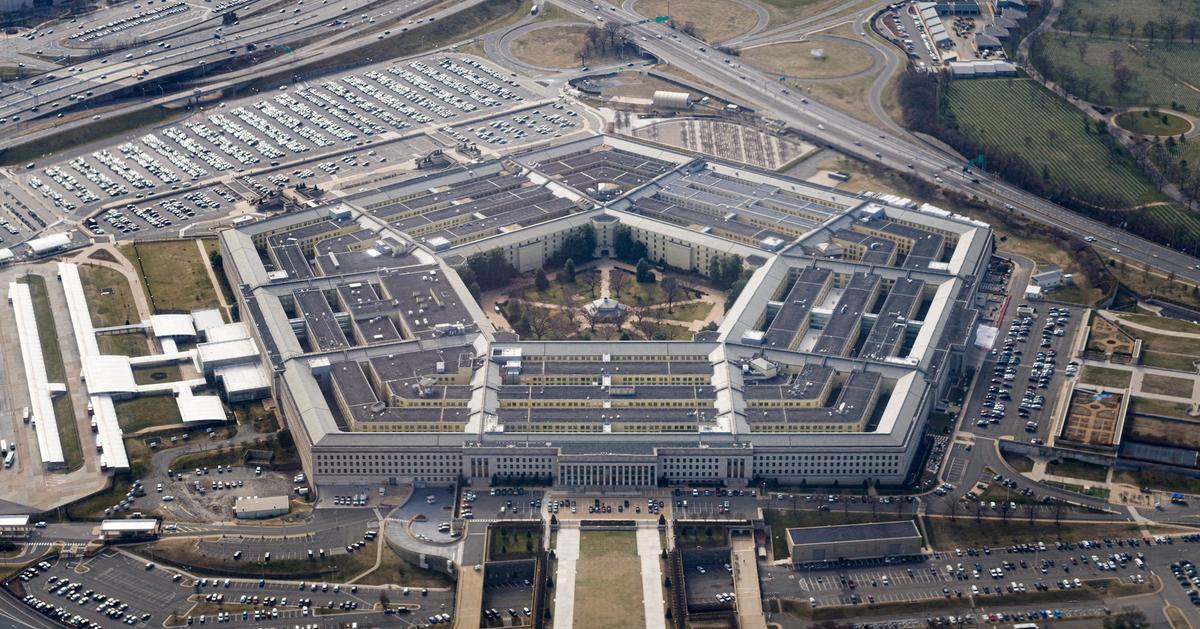
US-mediated peace talks between Ukraine and Russia have wrapped in Geneva, amid low hopes of a major breakthrough,…
 October Surprise 2016 - octobersurprise2016.org
According to her, Iranian officials have indicated in discussions with regional partners that they may agree to suspend uranium enrichment for up to three years, News.az reports citing The Wall Street Journal (WSJ).
***
Furthermore, Tehran is considering the possibility of transferring some of its reserves to a “third party, such as Russia.”
The post Iran is ready to suspend uranium enrichment as part of the deal with the US appeared first on azeritimes.com.
The post Iran is ready to suspend uranium enrichment as part of the deal with the US first appeared on The South Caucasus News – SouthCaucasusNews.com.

The massive investment comes as India seeks to strengthen its position in the global artificial intelligence race. Adani projects this initiative will help create a $250 billion AI infrastructure ecosystem in India over the next decade, News.Az reports, citing Reuters.
***
According to the company, the project is expected to stimulate an additional $150 billion in spending across related industries including server manufacturing, sovereign cloud platforms, and other supporting sectors.
“The world is entering an Intelligence Revolution more profound than any previous Industrial Revolution,” said Gautam Adani, chairman of Adani Group, in a statement. “India will not be a mere consumer in the AI age. We will be the creators, the builders and the exporters of intelligence and we are proud to be able to participate in that future.”
The company stated its AI vision will build upon AdaniConnex’s existing 2 gigawatt national data center network and leverage its strategic partnership with Google.
The post Adani to invest $100 billion in AI data centers over next decade appeared first on azeritimes.com.
The post Adani to invest $100 billion in AI data centers over next decade first appeared on The South Caucasus News – SouthCaucasusNews.com.

Bozell is expected to present his credentials to President Cyril Ramaphosa before formally assuming his diplomatic duties, News.az reports, citing CNN.
***
Trump announced Bozell’s nomination in March 2025, shortly after expelling South Africa’s ambassador to the United States, Ebrahim Rasool, accusing him of being critical of Washington.
Since Trump began his second term in 2025, relations between the United States and South Africa have deteriorated sharply. Analysts point to growing divergences on major international issues, including Pretoria’s 2023 case at the International Court of Justice, accusing Israel of genocide in Gaza. The U.S. administration has also accused South Africa of persecuting its white minority, a claim rejected by Pretoria, while Washington has imposed steep tariffs on South African exports and suspended aid.
Diplomatic tensions escalated in November last year when U.S. officials skipped the Group of 20 meetings hosted by South Africa.
At present, neither country has a resident ambassador. According to the SABC, South Africa’s Department of International Relations and Cooperation has not yet commented on Bozell’s arrival or announced a date for the presentation of credentials.
The post U.S. ambassador-designate arrives in South Africa amid strained ties appeared first on azeritimes.com.
The post U.S. ambassador-designate arrives in South Africa amid strained ties first appeared on The South Caucasus News – SouthCaucasusNews.com.

Despite Ankara’s formal stance and its miscalculated approach towards Jerusalem, third-party states continue to supply the country with Israeli-made goods. After imposing a so-called embargo on exports to and imports from Israel, it is reported that the Jewish state imported $924 million worth of goods from Turkey in 2025, defying the official rhetoric of the AKP-led Turkish government, which has now made Israel public enemy number one. Conversely, Israeli exports to Turkey amounted to nearly $11 million, after experiencing a freefall from $598.6 million in 2024. In addition to these relatively positive trade and economic ties, political relations have plummeted to an all-time low due to disagreements over the future of Gaza and Syria, where the state interests of the two regional powers intersect in opposite directions. To satisfy Turkey’s domestic audience, President Erdoğan has reportedly used third-party states such as Greece, Albania, Bulgaria, Georgia, and Azerbaijan to import essential Israeli products, thereby adding logistical costs, while simultaneously pressuring Azerbaijan to cut off all trading ties in the energy and defence sectors. Such hawkish policies imposed by Turkey have not gone down well in Baku, given Azerbaijan’s staunchly held principle of neutrality in international affairs. Nevertheless, the Azerbaijan–Israel alliance has continued to develop in good faith and with reliability, marked by ministerial visits, including Azerbaijani Minister of Defence Zakir Hasanov’s visit to Tel Aviv and Israeli Foreign Minister Gideon Sa’ar’s visit to Baku.
From the red line over Syria to “secretive” trade relations, Ankara’s prudence on the Palestinian issue has become way too costly to maintain for several reasons.
Generally, the neo-Ottoman foreign policy of the Republic of Turkey, aimed at asserting influence across the MENA region, has backfired in numerous cases. It is not unreasonable for Ankara to insist on a future role in Gaza or elsewhere, particularly in light of statements by the Israeli government, which has articulated a clear objective of disarming Hamas and other Palestinian terrorist groups.
The trajectory of Israel–Turkey relations suggests that another reconciliation may emerge in the interest of both countries’ security, recalling the warmer ties enjoyed during the informal alignment between the governments of David Ben-Gurion and Adnan Menderes. However, developments in Iran and the upcoming Turkish elections may prove detrimental to such a rapprochement.
The region may either witness competitive alignment between two blocs, Turkey, Saudi Arabia, and Qatar on one side, and Israel, the UAE, and Ethiopia on the other, competing for regional dominance, or move towards an American-managed regional order in which major powers coordinate security arrangements concerning Syria, Iraq, and Iran with like-minded partners.
Author: Farid Shukurlu
The post From Tension to Rapprochement: Can Israel and Turkey Rebuild Trust? appeared first on azeritimes.com.
The post From Tension to Rapprochement: Can Israel and Turkey Rebuild Trust? first appeared on The South Caucasus News – SouthCaucasusNews.com.