
Categories
News Review

Can Central Asia become the world’s next major trade hub?

For centuries, Central Asia served as a crossroads connecting civilizations, empires and commercial networks across Eurasia. Ancient caravan routes carrying silk, spices, precious metals and cultural ideas passed through the region, linking East Asia, the Middle East and Europe. Today, many policymakers and economists believe Central Asia could once again become one of the world’s most important trade corridors.
The region’s strategic location between Europe and Asia, combined with growing investments in transportation infrastructure, logistics networks and regional connectivity projects, is transforming Central Asia from a largely landlocked region into a potentially vital transit hub. Governments are investing billions of dollars in railways, highways, ports, customs modernization and digital trade systems designed to facilitate the movement of goods across Eurasia.
As global supply chains evolve and businesses seek alternative transportation routes, the question attracting increasing attention is whether Central Asia can successfully position itself as the next major center of international trade.
Why is Central Asia attracting so much attention?
Central Asia occupies one of the most strategically important locations in the world.
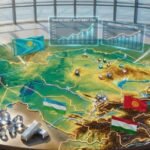
The region includes Kazakhstan, Uzbekistan, Kyrgyzstan, Tajikistan and Turkmenistan.
Situated between major economic centers in Europe, East Asia, South Asia, the Caucasus and the Middle East, the region possesses unique geographic advantages.
Historically, being landlocked was often viewed as an economic limitation. Today, however, improvements in transportation technology, logistics infrastructure and international cooperation are helping transform geography into a strategic asset.
As global trade volumes continue expanding, efficient overland routes connecting major markets have become increasingly valuable.
What is driving interest in new trade corridors?
Several developments are encouraging countries and businesses to diversify transportation routes.
First, global supply chains have become more complex and interconnected. Companies increasingly seek multiple options for transporting goods in order to reduce risks associated with disruptions.
Second, geopolitical tensions and logistical bottlenecks have highlighted the importance of supply chain resilience.
Third, advances in rail transportation, digital customs systems and logistics management have improved the competitiveness of overland trade routes.
These factors have encouraged governments and businesses to explore alternative corridors capable of connecting Europe and Asia more efficiently.
Central Asia sits at the center of many of these emerging transportation networks.
What is the Middle Corridor?
One of the most frequently discussed initiatives is the so called Middle Corridor, also known as the Trans Caspian International Transport Route.
The corridor connects East Asia with Europe through Central Asia, the Caspian Sea, the South Caucasus and onward to European markets.
Goods transported along this route move through multiple countries using rail, maritime and road infrastructure.
The corridor has attracted growing interest because it provides an alternative to several traditional Eurasian transportation routes.
Governments along the route are investing in infrastructure improvements designed to increase efficiency, reduce transit times and enhance cargo capacity.
Supporters believe the corridor could become one of the most important trade arteries linking Asia and Europe during the coming decades.
Why is Kazakhstan considered a key player?
Kazakhstan occupies a central position within Eurasian transportation networks.
As the largest economy and territory in Central Asia, Kazakhstan serves as a major transit gateway connecting China, Russia, the Caspian region and Europe.
The country has invested heavily in railways, logistics centers, dry ports and transportation infrastructure.
Major projects have improved connectivity between industrial regions and international trade routes.
Kazakhstan’s strategic location allows it to facilitate the movement of goods across vast distances while serving as a regional logistics hub.
Government officials have repeatedly emphasized the importance of transforming the country into a key transportation and transit center.
What role does Uzbekistan play?
Uzbekistan is increasingly emerging as one of the region’s most dynamic economies.
Its large population, expanding industrial base and central geographic position make it an important participant in regional connectivity initiatives.
Infrastructure modernization, trade reforms and investment projects have strengthened Uzbekistan’s role in regional commerce.
The country is actively pursuing improved transportation links with neighboring states and international markets.
As trade volumes grow, Uzbekistan’s logistics capabilities are expected to become increasingly significant.
Many analysts view the country’s economic transformation as an important factor supporting broader regional integration.
How important is China’s involvement?
China plays a major role in the development of Eurasian connectivity projects.
As one of the world’s largest trading nations, China has a strong interest in efficient transportation routes linking its manufacturing centers with international markets.
Chinese investments in infrastructure, logistics facilities and transportation corridors have contributed to regional development across parts of Central Asia.
Improved rail connections between China and Europe have already increased the volume of overland trade moving through the region.
The growth of these transportation links demonstrates the increasing importance of Central Asia within broader Eurasian trade networks.
Why are railways becoming more important?
Rail transportation is experiencing renewed importance in international logistics.
Compared with maritime shipping, rail routes can often reduce transit times for certain categories of goods moving between Asia and Europe.
Although rail generally remains more expensive than sea transport, it offers advantages for products requiring faster delivery.
Advances in logistics management, customs procedures and rail infrastructure have improved efficiency and reliability.
Central Asia’s expanding railway networks are helping connect major production centers and international markets.
As demand for diversified transportation options grows, rail corridors are expected to play an increasingly important role in global trade.
What challenges does the region face?
Despite significant opportunities, Central Asia must overcome several obstacles before becoming a major global trade hub.
Infrastructure development remains uneven across some areas.
Border crossing procedures can still create delays and increase transportation costs.
Differences in regulations, customs systems and technical standards sometimes complicate cross border trade.
Investment requirements remain substantial, particularly for transportation networks, logistics facilities and digital infrastructure.
Coordination among multiple countries is also essential because trade corridors frequently cross several national borders.
Addressing these challenges will require continued cooperation and long term planning.
Why is regional cooperation so important?
No single country can transform Central Asia into a major trade hub independently.
Efficient transportation corridors depend on coordination among governments, customs authorities, infrastructure operators and logistics companies.
Regional cooperation can help simplify border procedures, harmonize regulations and improve transportation efficiency.
Joint infrastructure projects also create opportunities to share costs and maximize economic benefits.
Recent years have witnessed increased dialogue among Central Asian governments regarding connectivity, trade facilitation and economic integration.
Many observers believe continued cooperation will be crucial for realizing the region’s full potential.
How could trade corridors benefit local economies?
Expanded trade networks can generate significant economic advantages.
Transportation and logistics industries create employment opportunities in warehousing, freight services, customs administration and infrastructure operations.
Improved connectivity can attract foreign investment by making markets more accessible.
Manufacturers may benefit from lower transportation costs and better access to international customers.
Regional businesses can integrate more effectively into global supply chains.
Tourism and service industries may also experience growth as transportation infrastructure improves.
The cumulative economic impact could contribute substantially to long term development across the region.
What role do ports play despite Central Asia being landlocked?
Although Central Asia itself lacks direct access to the ocean, nearby maritime infrastructure remains extremely important.
The Caspian Sea serves as a critical link connecting Central Asia with the South Caucasus and European markets.
Ports located along the Caspian coastline facilitate the movement of cargo between rail and maritime transportation systems.
Investments in port modernization, vessel capacity and logistics services are helping improve efficiency.
These facilities effectively function as gateways connecting landlocked Central Asian economies with global trade networks.
Could Central Asia compete with traditional trade routes?
Central Asia is unlikely to replace major maritime shipping routes entirely.
Sea transport remains the most cost effective option for many categories of goods moving long distances.
However, the objective is not necessarily replacement but diversification.
Alternative corridors provide businesses with greater flexibility and resilience.
Certain products may benefit from faster transit times available through overland routes.
As global trade continues expanding, multiple transportation corridors can coexist and complement one another.
Central Asia’s growing importance reflects this broader trend toward diversified logistics networks.
How do digital technologies support trade development?
Modern trade increasingly depends on digital infrastructure.
Electronic customs systems, cargo tracking technologies, digital documentation and automated logistics platforms improve efficiency and transparency.
Governments across Central Asia are investing in digital modernization to facilitate cross border commerce.
Reducing paperwork, streamlining procedures and improving information sharing can significantly decrease transit times.
Technology therefore plays an essential role in enhancing the competitiveness of regional trade corridors.
Digital transformation is becoming just as important as physical infrastructure development.
What is the outlook for the next decade?
Most analysts expect Central Asia’s role in international trade to continue expanding.
Infrastructure investments already underway are likely to improve transportation capacity and efficiency.
Regional cooperation initiatives may further simplify cross border trade.
Growing demand for diversified supply chains should increase interest in alternative Eurasian transportation corridors.
Economic development and industrial growth within Central Asia itself will also contribute to rising trade volumes.
While challenges remain, the long term trajectory points toward greater regional integration and connectivity.
Could Central Asia become a true global trade hub?
The answer depends on how successfully the region addresses existing challenges and capitalizes on emerging opportunities.
Central Asia possesses several key advantages:

Strategic geographic location

Growing infrastructure investment

Expanding transportation networks

Increasing regional cooperation

Strong interest from major trading partners

Rising importance of supply chain diversification

If these trends continue, the region could become one of the most important transit and logistics centers connecting Europe and Asia.
Although the transformation will take time, the foundations are increasingly being put in place.
The bottom line
Central Asia is undergoing a remarkable transformation from a historically landlocked region into a potentially vital center of Eurasian commerce. Massive investments in transportation infrastructure, expanding rail networks, growing regional cooperation and increasing demand for diversified trade routes are creating new opportunities for economic development and international connectivity.
While significant challenges remain, the region’s strategic location between major global markets provides a unique advantage. If governments continue improving infrastructure, facilitating trade and strengthening cooperation, Central Asia could emerge as one of the world’s most important trade hubs during the coming decades, reviving its historic role as a bridge between East and West in the modern global economy.

The post Can Central Asia become the world’s next major trade hub? appeared first on azeritimes.com.

The post Can Central Asia become the world’s next major trade hub? first appeared on The South Caucasus News – SouthCaucasusNews.com.


Categories
October Surprise 2016

arre.st — Public Arrest Records & Mugshots

Browse public arrest records, mugshots, headlines, and arrest news from across the United States. All individuals are presumed innocent until proven guilty in a court of law.
Categories
October Surprise 2016

arre.st — Public Arrest Records & Mugshots

Browse public arrest records, mugshots, headlines, and arrest news from across the United States. All individuals are presumed innocent until proven guilty in a court of law.
Categories
October Surprise 2016

arre.st — Public Arrest Records & Mugshots

Browse public arrest records, mugshots, headlines, and arrest news from across the United States. All individuals are presumed innocent until proven guilty in a court of law.
Categories
October Surprise 2016

arre.st — Public Arrest Records & Mugshots

Browse public arrest records, mugshots, headlines, and arrest news from across the United States. All individuals are presumed innocent until proven guilty in a court of law.
Categories
News Review

Ralph Lauren shares jump 10% as strong China sales help drive growth http://reut.rs/4tPc2x8 http://reut.rs/4tPc2x8

Categories
News Review

Why has the semiconductor industry become the world’s most important geopolitical battlefield?

What was once viewed primarily as a commercial and technological sector has evolved into one of the most important arenas of global geopolitical competition. Governments are investing hundreds of billions of dollars to secure chip supplies, build domestic manufacturing capacity and reduce dependence on foreign producers. At the same time, export controls, technology restrictions and industrial policies are reshaping international trade and supply chains.
***
In 2026, the semiconductor industry sits at the center of strategic competition among major powers, particularly the United States and China, while countries across Europe and Asia seek to strengthen their own positions in a market that has become essential to economic growth, technological leadership and national security.
What exactly are semiconductors?
Semiconductors are materials used to manufacture microchips that process, store and transmit information inside electronic devices.
Modern chips perform billions of calculations every second and serve as the foundation of virtually every advanced technology.
They are found in:

Smartphones

Personal computers

Data centers

Telecommunications networks

Medical equipment

Industrial machinery

Consumer electronics

Electric vehicles

Aircraft

Satellites

Military systems

Artificial intelligence platforms

As societies become increasingly digital, demand for advanced semiconductors continues to rise across nearly every sector of the economy.
Why are semiconductors so strategically important?
Semiconductors have become essential because they determine technological capability.
Countries with access to advanced chips can develop more powerful computers, faster communications systems, more capable artificial intelligence applications and increasingly sophisticated military technologies.
Modern economies rely heavily on digital infrastructure. Financial systems, transportation networks, energy grids, healthcare systems and manufacturing facilities all depend on semiconductor powered technologies.
A disruption in chip supplies can affect entire industries and significantly impact economic performance.
Governments increasingly view semiconductor production not merely as an economic activity but as a matter of national security and strategic autonomy.
How did semiconductors become a geopolitical issue?
For decades, the semiconductor industry developed through global specialization.
Different countries focused on specific stages of production.
The United States became a leader in chip design and software.
Taiwan emerged as the world’s most important advanced manufacturing hub.
South Korea developed major memory chip production capabilities.
Japan became a key supplier of specialized materials and manufacturing equipment.
European companies established important positions in equipment manufacturing and industrial technologies.
China became a major electronics manufacturing center and a large consumer of semiconductor products.
This highly interconnected system delivered efficiency and innovation but also created vulnerabilities.
Recent geopolitical tensions exposed the risks associated with concentrated supply chains and dependence on a limited number of production centers.
As a result, semiconductors moved from being a commercial concern to becoming a strategic priority.
Why is Taiwan so important?
Taiwan occupies a uniquely important position in the global semiconductor industry.
The island hosts some of the world’s most advanced chip manufacturing facilities and produces a substantial share of cutting edge semiconductors used in high performance computing, artificial intelligence and advanced electronics.
Many of the most sophisticated chips designed by global technology companies are manufactured in Taiwan.
This concentration of production has made Taiwan a critical component of the global technology ecosystem.
Governments and businesses worldwide closely monitor developments affecting Taiwan because disruptions could have significant consequences for global supply chains.
Its strategic importance has therefore become a central consideration in international economic and security planning.
Why are the United States and China competing over chips?
The semiconductor industry lies at the heart of broader technological competition between the United States and China.
Both countries recognize that leadership in advanced technologies increasingly depends on access to powerful semiconductors.
For the United States, maintaining advantages in areas such as artificial intelligence, advanced computing, defense technologies and innovation remains a strategic priority.
For China, reducing dependence on imported semiconductor technologies and strengthening domestic production capabilities have become major national objectives.
The competition involves manufacturing capacity, research and development, talent acquisition, supply chain security and access to critical technologies.
As a result, semiconductors have become one of the most important dimensions of contemporary geopolitical rivalry.
What are export controls and why do they matter?
Export controls are restrictions placed on the sale or transfer of certain technologies, equipment or products.
Governments use these measures to protect national security interests and prevent sensitive technologies from being used in ways that could threaten strategic advantages.
In the semiconductor sector, export controls often focus on advanced manufacturing equipment, specialized software and high performance chips.
These restrictions can significantly influence global supply chains because modern chip production depends on highly specialized tools and technologies that are available from only a limited number of suppliers.
Supporters argue that export controls protect national security and technological leadership.
Critics contend that excessive restrictions may increase fragmentation and reduce efficiency within global markets.
Why are governments investing billions in domestic chip production?
The disruptions experienced during the global semiconductor shortages earlier in the decade highlighted the vulnerability of highly concentrated supply chains.
Automobile manufacturers, electronics producers and industrial companies faced production delays due to chip shortages, demonstrating the economic importance of reliable semiconductor supplies.
In response, governments launched major initiatives designed to strengthen domestic manufacturing capabilities.
Programs in the United States, Europe and Asia aim to attract investment, support research and encourage construction of new fabrication facilities.
Policymakers hope these efforts will improve supply chain resilience, create high value jobs and enhance national competitiveness.
Building advanced semiconductor facilities requires enormous financial resources, making government support an important factor in many projects.
How expensive is chip manufacturing?
Semiconductor production is among the most capital intensive industries in the world.
Constructing a state of the art fabrication plant can require investments measured in tens of billions of dollars.
Manufacturing advanced chips also demands:

Specialized equipment

Highly skilled engineers

Complex supply chains

Ultra clean production environments

Continuous research and development

The technical complexity involved is extraordinary. Modern chips contain billions of transistors packed into extremely small spaces, requiring manufacturing precision measured in nanometers.
Only a limited number of companies possess the expertise and resources necessary to operate at the industry’s technological frontier.
What role does artificial intelligence play?
Artificial intelligence has dramatically increased the strategic importance of semiconductors.
Advanced AI systems require enormous computing power for both training and operation. This demand has created intense competition for high performance chips capable of handling complex calculations.
As governments and businesses invest heavily in AI development, demand for advanced processors continues to grow rapidly.
The connection between AI and semiconductors has further elevated the industry’s geopolitical significance because access to cutting edge chips increasingly influences technological competitiveness.
Many experts believe that future leadership in artificial intelligence will depend heavily on semiconductor capabilities.
Why is Europe strengthening its semiconductor sector?
The European Union recognizes the importance of reducing vulnerabilities within critical technology supply chains.
European policymakers are encouraging investment in research, manufacturing and advanced technology development to strengthen the continent’s semiconductor ecosystem.
The objective is not necessarily complete self sufficiency but rather greater resilience and strategic flexibility.
Europe already possesses strengths in areas such as semiconductor equipment, industrial technologies and specialized manufacturing.
Additional investment aims to expand these capabilities while attracting new production facilities.
How important is South Korea?
South Korea remains one of the world’s leading semiconductor producers.
The country hosts globally significant companies specializing in memory chips and advanced electronics.
South Korea’s manufacturing expertise, technological capabilities and substantial research investments make it a critical player within the global semiconductor ecosystem.
The country’s success demonstrates how semiconductor leadership can contribute significantly to national economic growth and international competitiveness.
As demand for advanced computing and artificial intelligence expands, South Korea’s role is likely to remain highly important.
What challenges does China face?
China has invested heavily in developing domestic semiconductor capabilities.
However, building a complete semiconductor ecosystem presents significant challenges.
Advanced chip production requires expertise across numerous specialized fields, including equipment manufacturing, materials science, software development and process engineering.
While China has made substantial progress in several areas, achieving leadership at the most advanced technological levels remains a long term objective.
Continued investment, research and talent development are expected to remain central components of China’s semiconductor strategy.
Could global semiconductor supply chains become fragmented?
One of the major concerns among industry leaders is the possibility of increasing fragmentation.
Historically, globalization allowed different countries to specialize in particular stages of semiconductor production, creating highly efficient supply chains.
Growing geopolitical competition may encourage greater localization of production and reduced dependence on foreign suppliers.
While diversification can improve resilience, excessive fragmentation could increase costs, reduce efficiency and slow innovation.
Governments therefore face the challenge of balancing security concerns with the economic benefits of international cooperation.
What does the future look like?
Demand for semiconductors is expected to continue expanding throughout the coming decade.
Artificial intelligence, cloud computing, 5G and future telecommunications technologies, autonomous vehicles, advanced manufacturing and digital infrastructure will all require increasingly powerful chips.
At the same time, geopolitical competition is likely to remain intense.
Governments will continue investing in domestic capabilities, strengthening supply chains and protecting strategic technologies.
Innovation will remain essential because technological leadership can provide significant economic and strategic advantages.
The industry is therefore expected to remain a focal point of both technological progress and international competition.
Why should ordinary consumers care?
Although semiconductor policy may appear highly technical, its effects influence everyday life.
The availability and cost of electronic devices, automobiles, internet services and countless consumer products depend on semiconductor supply chains.
Disruptions can lead to shortages, higher prices and slower technological innovation.
Conversely, continued investment and innovation help support economic growth, job creation and technological advancement.
The semiconductor industry affects far more than technology companies. It increasingly influences the broader global economy and modern society itself.
The bottom line
The semiconductor industry has become the world’s most important geopolitical battlefield because control over advanced chips increasingly determines economic competitiveness, technological leadership and national security. Governments recognize that semiconductors power the technologies shaping the future, from artificial intelligence and telecommunications to defense systems and critical infrastructure.
As competition intensifies among major powers and countries invest heavily in domestic production capabilities, semiconductors will remain at the center of global strategic discussions. The outcome of this competition could influence the balance of technological power, economic growth and international relations for decades to come.

The post Why has the semiconductor industry become the world’s most important geopolitical battlefield? appeared first on azeritimes.com.

The post Why has the semiconductor industry become the world’s most important geopolitical battlefield? first appeared on The South Caucasus News – SouthCaucasusNews.com.

Categories
News Review

US security chief visits Mexico for crime talks

The two-day official visit, arranged directly after a phone call between Sheinbaum and President Donald Trump, marks the first trip to Mexico this year by a senior official from the U.S. administration, News.Az reports, citing UPI.
***
The visit comes after federal prosecutors in New York filed narcotics trafficking charges against 10 current and former officials from the state of Sinaloa, including Gov. Rubén Rocha Moya, over alleged drug trafficking and weapons offenses.
According to the newspaper El Universal, it is the first time Washington has demanded the urgent arrest of sitting politicians by linking them directly to the Sinaloa cartel, triggering a political crisis in Mexico that continues to unfold.
Among those sought by U.S. authorities were former Security Secretary Gerardo Mérida Sánchez and former Finance Secretary Enrique Díaz Vega, both of whom voluntarily surrendered in mid-May.
U.S. officials have interpreted those surrenders as confirmation of organized crime infiltration within institutions in the northern Mexican state.
During her morning press conference before the meeting, Sheinbaum said both governments continue to coordinate under a bilateral security understanding reached recently, but stressed that Mexican sovereignty must be respected.
“Remember that an agreement was signed with the United States and we have been working very well under that understanding. All we want is for that cooperation to continue,” she said.
According to Mexican media outlets, the diplomatic agenda includes two other sensitive issues.
One involves the recent deaths of two CIA agents in a car accident in the state of Chihuahua, which raised questions about the role of the intelligence agency in Mexico.
The other concerns Mexico’s complaints over the deaths of 15 Mexican migrants while in custody at detention centers operated by U.S. Immigration and Customs Enforcement.
After the private meeting with Sheinbaum, Mullin is expected to hold working sessions with Mexico’s security cabinet focused on fentanyl trafficking, money laundering and arms smuggling.

The post US security chief visits Mexico for crime talks appeared first on azeritimes.com.

The post US security chief visits Mexico for crime talks first appeared on The South Caucasus News – SouthCaucasusNews.com.

Categories
News Review

US Supreme Court deals setback to cruise operators over Cuba confiscations http://reut.rs/4fyio0e http://reut.rs/4fyio0e

Categories
October Surprise 2016

Restituição do Imposto de Renda 2026: Calendário de Lotes e Como Consultar

Quer saber quando vai receber a Restituição do IR 2026? Confira o calendário de lotes, quem tem prioridade no pagamento e como consultar o status.