
Last week, Russia launched the largest continuous aerial attack against Ukraine since the beginning of the war, involving over 1,600 drones and missiles, causing significant civilian casualties. Ukraine responded with a large-scale attack on Moscow that penetrated four echelons of air defence and struck critical infrastructure facilities, bringing the war back to where it started and causing anxiety among the Russian public.
In this edition:
-
Russia’s Attacks Against Ukraine and The Role of Western Industry;
-
The War Returns Home: Ukraine Launches Major Attack on Moscow;
-
How Ukraine Plans to Counter Jet-Powered Shaheds;
-
Drone Warfare in Ukraine: Key Updates;
-
and other developments in Ukraine and Russia.
Just a quick reminder: due to my busy schedule this month, I’m temporarily merging the Arms Trends in Ukraine and Drone Warfare in Ukraine newsletters. However, my weekly two-page Ukraine Drone Brief will continue to be published on a regular basis.
Thank you for reading and supporting my work!
Subscribe
Russia’s Attacks Against Ukraine and The Role of Western Industry
Russian forces carried out two days of near-continuous long-range strikes against Ukraine, launching more than 1,600 drones and missiles, with Kyiv heavily targeted and significant civilian casualties reported. Between May 12 and 14, Russia used large-scale strike packages that included Kinzhal aeroballistic missiles, Iskander ballistic missiles, and Kh-101 cruise missiles in an attempt to overwhelm Ukrainian air defences.
Russian forces launched a strike package totaling 892 drones and missiles against Ukraine from 6 pm on May 12 to 6:30 pm on May 13. The Ukrainian Air Force subsequently reported that Russian forces launched 731 drones and missiles from 6 pm local time on May 13 to the morning of May 14.
The spokesperson of Ukraine’s Air Force stated that there was only a short pause between strikes, which was insufficient for personnel and equipment to recover. He added that the Air Force has operated at such an intense level multiple times before, but physical exhaustion and equipment strain are becoming increasingly apparent.
According to President Zelensky, Ukrainian forces intercepted about 94% of the drones and 73% of the missiles.
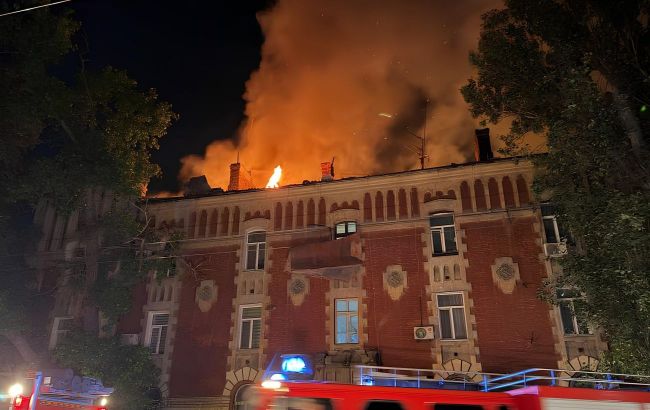
A Russian Kh-101 cruise missile struck a residential building in Kyiv and exploded inside the structure, causing reinforced concrete sections to collapse. The attack killed 24 people, including three children, while another 48 were injured, among them two children.
Ukraine’s presidential sanctions commissioner stated that Russian forces used Kh-101 cruise missiles from the same production batch during the May 14 strike on Kyiv. Analysis of the missile debris indicated that the batch had been manufactured in 2026.
According to Vlasiuk, a concerning issue remains the significant share of Western-made components found in newly produced Russian missiles. Each missile contained more than 100 Western-made components. Ukraine once again shared relevant evidence with international partners.
Ukraine’s commissioner referred to some successful and unsuccessful cases on sanctions work. The case of NVIDIA: about a year ago, Russia reportedly began actively integrating computer vision modules into drones, including some Shahed variants, although the technology did not become widespread. This may be linked to U.S. intelligence efforts that, based on Ukrainian information, disrupted part of the critical supply chain.
At the same time, he cited opposite examples, including components manufactured by STMicroelectronics, one of Europe’s largest microelectronics producers. Ukraine has been trying to engage the company on the issue. Officials provided around 50 serial numbers of STMicroelectronics components discovered in Russian weapons this year. However, the company responded that these were “minor components” that allegedly do not pose a significant issue, or that they were manufactured outside Switzerland, limiting the company’s ability to influence the situation.
The War Returns Home: Ukraine Launches Major Attack on Moscow
Overnight on May 17, Ukrainian forces conducted what was the largest drone attack against the Russian capital since the beginning of the war. Maps tracking Moscow’s air defence activity and the routes of Ukrainian drones during the large-scale attack have started to emerge.