
MORE: ISW is no longer prepared to forecast when Russian forces might seize Donetsk, including the Fortress Belt, since the slowing rate of Russian advances and the challenging nature of the Ukrainian-held terrain in Donetsk makes it unclear that Russia is capable of seizing the… https://t.co/nXElPf1fMq
— Institute for the Study of War (@TheStudyofWar) May 14, 2026
Day: May 14, 2026
MORE: ISW is no longer prepared to forecast when Russian forces might seize Donetsk, including the Fortress Belt, since the slowing rate of Russian advances and the challenging nature of the Ukrainian-held terrain in Donetsk makes it unclear that Russia is capable of seizing the territory at all. ⬇️
Russia’s exaggerated territorial ambitions and aggressive territorial demands run completely counter to battlefield reality. Anonymous sources in contact with Putin and additional sources familiar with the matter as well as a Ukrainian intelligence assessment shared with FT indicate that senior Russian commanders have convinced Putin that Russian forces could seize all of Donetsk and Luhansk oblasts by Fall 2026. ISW has observed evidence to assess that Russian forces have only advanced 349.89 square kilometers in Donetsk Oblast since the start of 2026, an advance rate of 2.63 square kilometers per day.
Strong Ukrainian fortifications, the area’s challenging human and physical geography, and Ukrainian counterattacks and mid-range strike campaign that are already inhibiting Russian offensive operations across the theater make the prospects for a Russian seizure of the rest of Donetsk dim.
Russian forces first infiltrated into Kostyantynivka (the Fortress Belt’s southernmost city) in October 2025 and have failed to make any significant tactical gains in the city over the last six months. Ukrainian counterattacks in southern Ukraine since early 2026 have also forced Russia to choose between defending against Ukrainian counterattacks and allocating manpower and resources to priority sectors of the frontline, including the Fortress Belt.
Ukraine’s recent successes are accomplishing tactical, operational, and strategic battlespace effects that undermine Putin’s narrative that the Ukrainian frontlines are on the verge of collapse. Two people involved in back-channel negotiations over ending the war told the FT that Putin’s ambitions are still to control all the Ukrainian territory between Russia and the Dnipro River, and possibly farther into Kyiv City and the port of Odesa, despite Russia’s stalling offensive. Putin’s thinking thus appears to be further and further removed from battlefield realities, likely resulting in the issuance of orders to the Russian military to make gains that it is not capable of making.Institute for the Study of War (@TheStudyofWar)Russian Offensive Campaign Assessment, May 13, 2026
The Kremlin is doubling down on its demand that Ukraine withdraw from all of Donbas as a precondition for the resumption of negotiations.
Other Key Takeaways:
Russia’s exaggerated territorial ambitions and aggressive territorial demands run completely counter to battlefield reality.
US President Donald Trump said that he has not agreed with Putin that Russia should acquire all of Donetsk and Luhansk.
Russian courts are increasingly leveraging corruption charges as a pretext to nationalize Russia’s largest corporations, likely setting conditions for the broader nationalization of private assets to support state revenues.
Russian demands for cash reached an all-time high over Victory Day weekend, demonstrating rising societal fears over internet restrictions and tax policy.
Ukrainian forces continue to increase the range and frequency of their long-range drones strikes against Russian oil infrastructure, exploiting overstretched Russian air defenses.
Russian forces conducted large-scale drone strikes overnight on May 12 and throughout the day on May 13, killing at least six people.
The Russian State Duma passed a bill granting the Russian president powers for extraterritorial military operations to protect Russian citizens abroad, previously introduced on March 10.
Ukrainian forces recently advanced in the Slovyansk, Oleksandrivka, and Hulyaipole directions and in the Kostyantynivka-Druzhkivka tactical area.— https://x.com/TheStudyofWar/status/2054742771840201171
— Institute for the Study of War (@TheStudyofWar) May 14, 2026
#CIA #DroneWars #Mossad Ukrainian defense units successfully intercepted or disabled over 1,500 of the total (1,600) aerial threats (93.75%).The Trump-Xi Dynamic and Drone Wars share.google/aimode/JlYnxpFU…The bilateral relationship between US President Donald Trump and Chinese President Xi Jinping is heavily shaped by a global “drone war” spanning economic blacklists, proxy battlefields, and intense technological competition. This […]
The post #CIA #DroneWars #Mossad Ukrainian defense units successfully intercepted or disabled over 1,500 of the total (1,600) aerial threats (93.75%). The Trump-Xi Dynamic and Drone Wars https://share.google/aimode/JlYnxpFU5f7XNbMFO The bilateral relationship between US President Donald Trump and Chinese President Xi Jinping is heavily shaped by a global “drone war” spanning economic blacklists, proxy battlefields, and intense technological competition. This dynamic is unfolding directly across several major geopolitical fronts: [1, 2, 3] 1. The Domestic Market and Supply Chain Blacklists Federal Blacklisting: The Trump administration enacted sweeping policies blocking all new foreign-made drones and first appeared on The News And Times Review – NewsAndTimes.org.
#CIA #DroneWars #Mossad
Ukrainian defense units successfully intercepted or disabled over 1,500 of the total (1,600) aerial threats (93.75%).
The Trump-Xi Dynamic and Drone Wars
share.google/aimode/JlYnxpFU…
The bilateral relationship between US President Donald Trump and Chinese President Xi Jinping is heavily shaped by a global “drone war” spanning economic blacklists, proxy battlefields, and intense technological competition. This dynamic is unfolding directly across several major geopolitical fronts: [1, 2, 3]
1. The Domestic Market and Supply Chain BlacklistsFederal Blacklisting: The Trump administration enacted sweeping policies blocking all new foreign-made drones and critical components from entering the US consumer and commercial markets without strict federal approval.
Targeting Chinese Monopolies: This measure specifically targets China’s dominance in the global small-drone sector, forcing a pivot toward a domestic, “Made-in-America” drone supply chain.
Military-Commercial Synergy: The Pentagon and Congress are aggressively funding domestic manufacturing to lower commercial prices, which in turn scales affordable procurement for the US military. [1, 4]2. The Iran War Proxy Dynamic
Chinese Tech Transfers: Tensions have escalated rapidly due to US intelligence findings that China is supplying offensive drones, dual-use drone motors, and geospatial intelligence to Iran.
US Sanctions: The US Treasury Department has responded by imposing sweeping secondary sanctions on Chinese and Hong Kong-based companies accused of facilitating financial and hardware procurement for Iran’s Shahed drone program.
Operational Intelligence: Beijing is actively studying the war to analyze US military constraints—such as the depletion rate of American defense stockpiles—while monitoring how mass-produced, cheaper drone technologies perform against advanced Western defense systems. [5, 6, 7, 8, 9, 10]3. The Taiwan Strait and Regional Flashpoints
Military Coercion: China has steadily integrated drone, balloon, and aircraft incursions into its gray-zone military campaign to wear down Taiwan’s air defenses.
Asymmetric Defense: Recognizing it cannot match China’s raw naval output, Taiwan is heavily leaning into its own homegrown autonomous drone sector, backed by large-scale US arms sales that include precision munitions and tactical drones.
Global Micro-Competition: The technological friction is extending even to neutral territories. For example, a “drone war” has emerged as far as Nepal, where the US and China are competing to demonstrate high-altitude drone capabilities for logistics and rescue missions on Mount Everest. [2, 11, 12, 13][1] youtube.com
[2] foreignaffairs.com
[3] news18.com
[4] wicker.senate.gov
[5] rferl.org
[6] foxnews.com
[7] youtube.com
[8] en.wikipedia.org
[9] newyorker.com
[10] youtube.com
[11] aljazeera.com
[12] globalaffairs.org
[13] bloomberg.com
–China’s Dual-Use Tech to Russia/Iran gemini.google.com/share/a371…
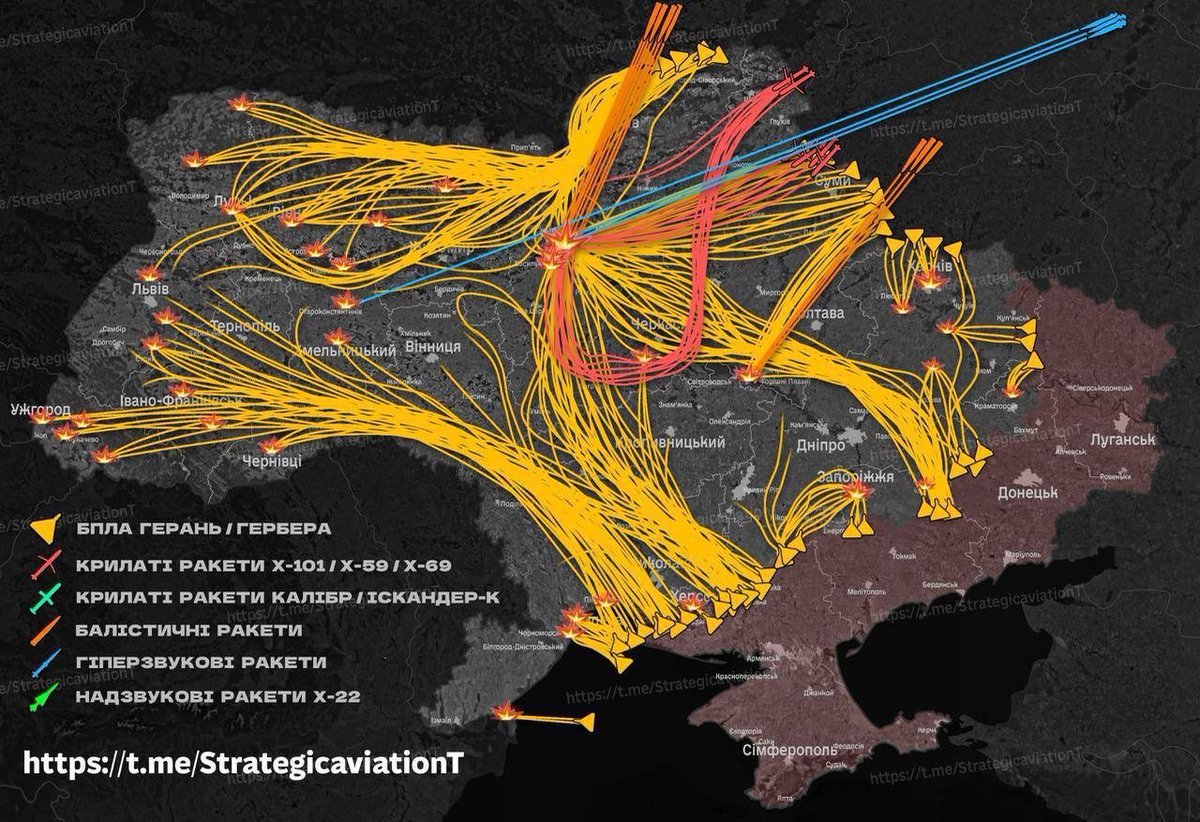
The attack routes of approximately 1,600 Russian drones and missiles within a 24-hour period
share.google/aimode/8rl39Xta…
Gemini:
Here is an assessment and predictive analysis of the geopolitical dynamics surrounding a potential Trump-Xi engagement in 2026, with a specific focus on the critical nodes of modern warfare: the flow of Chinese Unmanned Aerial Vehicles (UAVs) and Electronic Warfare (EW) components to Russia and Iran.### I. The Trump-Xi Dynamic: A Clash of Decision-Making Architectures
Applying a structural and psychological lens to the leadership dynamics reveals a profound asymmetry in how Washington and Beijing will likely approach high-stakes negotiations in 2026.
* **The Transactional vs. The Institutional:** The U.S. executive approach under Donald Trump typically relies on a highly personalized, unpredictable, and strictly transactional methodology. This relies heavily on bilateral leverage (primarily economic tariffs and the threat of severe market decoupling) to force immediate concessions. In contrast, Xi Jinping operates through a deeply entrenched, institutional, and long-term strategic framework. Beijing prioritizes regime stability and the gradual restructuring of the global order over short-term transactional victories.
* **The Leverage Trap:** A 2026 summit or major diplomatic push would likely see the U.S. attempting to use extreme economic pressure to force Beijing to sever its military-industrial lifelines to Moscow and Tehran. However, Beijing views the survival of the Russian state and the persistence of Iranian disruption as vital strategic buffers that keep the U.S. overextended. The assessment is that Beijing will absorb immense economic pain rather than abandon its strategic depth in Eurasia and the Middle East.### II. The Strategic Nodes: Drones and Electronic Warfare
The most critical vector of Chinese support for the Russia-Iran axis is not necessarily the direct transfer of fully assembled weapons systems, but the supply of foundational modern warfare technologies and the vital components that enable them.
#### A. The Drone Supply Chain and Transnational Networks
China holds a near-monopoly on the global commercial and dual-use drone supply chain. The transfer of these capabilities to Russia and Iran relies heavily on complex, transnational logistical networks that frequently blur the lines between state-sanctioned trade and gray-market smuggling operations.
* **Russia:** By 2026, the flow of Chinese components (motors, flight controllers, optics, and carbon fiber frames) is deeply integrated into Russia’s domestic drone production (such as the localized manufacturing of Shahed-type munitions and indigenous reconnaissance drones). The U.S. faces significant friction in tracking and sanctioning these shipments because they often pass through third-party jurisdictions in Central Asia or the Caucasus, utilizing corporate shell structures that rapidly dissolve and reconstitute.
* **Iran:** China serves as the primary technological enabler for Iran’s expanding UAV program. The components supplied allow Iran to continuously refine its drone capabilities, which are then proliferated to state and non-state actors across the Middle East.
* **Assessment:** Direct diplomatic pressure from a Trump administration is unlikely to halt this flow. Instead, Beijing is assessed to merely shift these operations deeper into obscured, transnational commercial networks, maintaining plausible deniability while sustaining the supply.#### B. Electronic Warfare (EW) and Microelectronics
The battlefields of the mid-2020s have demonstrated that EW is a decisive domain. China’s role as the primary supplier of advanced microelectronics and EW sub-components to Russia and Iran fundamentally alters the tactical balance.
* **The Component Lifeline:** Russia’s formidable EW capabilities—used to jam GPS signals, degrade the effectiveness of precision-guided munitions, and suppress communications—are highly dependent on imported microchips and circuitry. Despite Western sanctions, China remains the critical conduit for these technologies.
* **Strategic Impact:** The infusion of Chinese tech allows Russia to adapt to and mitigate Western technological advantages. For Iran, access to Chinese EW technology enhances the survivability of its air defense networks and the effectiveness of its asymmetrical maritime and regional operations.### III. 2026 Predictions and the Path Forward
Looking at the trajectory of these negotiations and the established patterns of state behavior, several key predictions emerge for 2026:
1. **The Failure of the “Grand Bargain”:** Any attempt by the U.S. executive to engineer a “Kissinger-style” reverse alignment—offering major economic concessions to Beijing in exchange for abandoning Moscow—will almost certainly fail. Beijing views the Sino-Russian partnership as a structural necessity to counter U.S. hegemony, not a trading card.
2. **Escalation in Economic Statecraft:** Failing a diplomatic breakthrough, expect a rapid escalation in targeted sanctions focusing specifically on Chinese financial institutions facilitating dual-use trade, rather than broad, unfocused tariffs. This targets the “state-crime nexus” by penalizing the banks that launder the transactions of gray-market technology smugglers.
3. **The Epistemological Gap in Intelligence:** U.S. and allied intelligence communities will continue to struggle with an epistemological gap regarding Chinese intent. Distinguishing between state-directed technology transfers and the independent actions of opportunistic Chinese manufacturing firms will remain a profound challenge for those tracking these supply chains.
4. **Acceleration of Autonomous Systems:** The pressure applied to these supply lines will accelerate the push within Russia and Iran (with Chinese assistance) toward fully autonomous, AI-driven drone swarms. By reducing the need for continuous command-and-link communications, these systems become highly resistant to the very EW environments they operate within.The foundational challenge for 2026 is that the U.S. relies on economic deterrence against an adversary (China) that views the arming of Russia and Iran not as an economic venture, but as a core pillar of its own national security architecture.
What specific aspects of the transnational networks facilitating these dual-use technology transfers are you currently focusing your assessments on?
–The attack routes of approximately 1,600 Russian drones and missiles within a 24-hour period
share.google/aimode/mr8Lf2Di…See also:
x.com/jurgen_nauditt/status/…AI Mode:
On May 14, 2026, Russia launched a massive, record-breaking air assault against Ukraine utilizing more than 1,600 drones and missiles over a continuous 30-hour bombardment period. The unprecedented offensive involved a highly complex, multi-directional combination of 56 advanced missiles and over 1,560 Shahed-type uncrewed aerial vehicles (UAVs). The strike routes were intentionally distributed to overwhelm air defenses, spanning from the southern coast to northern borders and reaching deep into western Ukraine. [1, 2, 3]
Composition of the Attack Assets
The Ukrainian Air Force confirmed that the combined strike consisted of the following specific weapons: [2, 4]675+ Shahed-type Kamikaze Drones deployed during the primary overnight wave.
35 Kh-101 Cruise Missiles launched from strategic bombers.
18 Iskander-M Ballistic Missiles fired from mobile ground launchers.
3 Kh-47M2 Kinzhal Aeroballistic Missiles fired from MiG-31K interceptors.
800+ Additional Drones deployed across continuous day and night waves to maintain airspace saturation. [1, 2, 5, 6, 7]Geographic Attack Routes
Russian forces utilized at least five primary geographic vector directions to converge on target zones, making the combined flight map resemble an interconnected “knitting pattern”: [5, 8, 9][Belarus Vectors] ——-> (Northern Ukraine: Kyiv, Chernihiv)
[ Kursk Vectors ] ——-> (Central/Eastern Ukraine: Kharkiv, Kremenchuk)
[Occupied Crimea] ——-> (Southern Ukraine: Odesa, Chornomorsk, Mykolaiv)
[Black Sea Fleet] ——-> (Deep Western Ukraine: Lviv)
The Northern Route (via Belarus): A massive contingent of suicide drones bypassed traditional border radars by routing through Belarusian airspace to target Kyiv and Chernihiv.
The Southern Maritime Route (via Black Sea/Crimea): Cruise missiles and Shahed swarms were launched from occupied Crimea and naval vessels, tracking north along the coast toward Odesa, Chornomorsk, and Mykolaiv.
The Eastern/Northeastern Route (via Kursk/Belgorod): Ballistic missiles and swarm UAVs crossed the Russian border directly into northeastern hubs like Kharkiv and Central Ukraine.The Deep Western Route: Multiple cruise and aeroballistic missiles utilized low-altitude evasive flight paths, wrapping around the southern border before pivoting north to strike deep western cities near Poland, specifically Lviv. [1, 2, 10, 11, 12, 13, 14]
Target Breakdown and Damage Control
Ukrainian defense units successfully intercepted or disabled over 1,500 of the total aerial threats. Despite this high interception rate, concentrated hits on critical infrastructure triggered severe localized damage: [2, 4, 5]
Kyiv & Northern Regions: Debris and direct hits damaged civilian infrastructure across 20 separate locations in the capital city, hitting apartment blocks, a school, and a clinic.Energy Substations: Targeted hits on power infrastructure in Chernihiv and the central city of Kremenchuk forced multiple grid shutdowns, triggering extensive blackouts affecting hundreds of thousands of civilians.
Port Infrastructure: The port areas in Chornomorsk and Odesa sustained severe impacts to warehouses and cargo handling facilities, disrupting maritime logistics. [1, 5]If you would like more granular information on this event, please let me know if you want to explore the types of air defense systems used for interceptions, the civilian casualty figures by region, or the international diplomatic response following the barrage.
[1] instagram.com
[2] united24media.com[3] instagram.com
[4] instagram.com
[5] instagram.com
[6] x.com
[7] table.media
[8] x.com
[9] youtube.com
[10] facebook.com
[11] youtube.com
[12] instagram.com
[13] orlandosentinel.com
[14] abcnews.com
–— Michael Novakhov (@mikenov) May 14, 2026
Categories
Israel and the Middle East

|




After 26 calm days, migrant activity has resumed on the Polish-Belarusian border
Over the past 24 hours, the Polish Border Guard recorded nearly 20 attempts by migrants to illegally cross the border from Belarus.
Since the beginning of 2026, Poland has registered around 190 such attempts, 37.5 times fewer than during the same period last year (7,136 attempts).
— Visegrád 24 (@visegrad24) May 14, 2026
English voters where Labour lost say PM Starmer has to go reut.rs/4fqZs3o reut.rs/4fqZs3o
— @Reuters May 14, 2026
Trump:
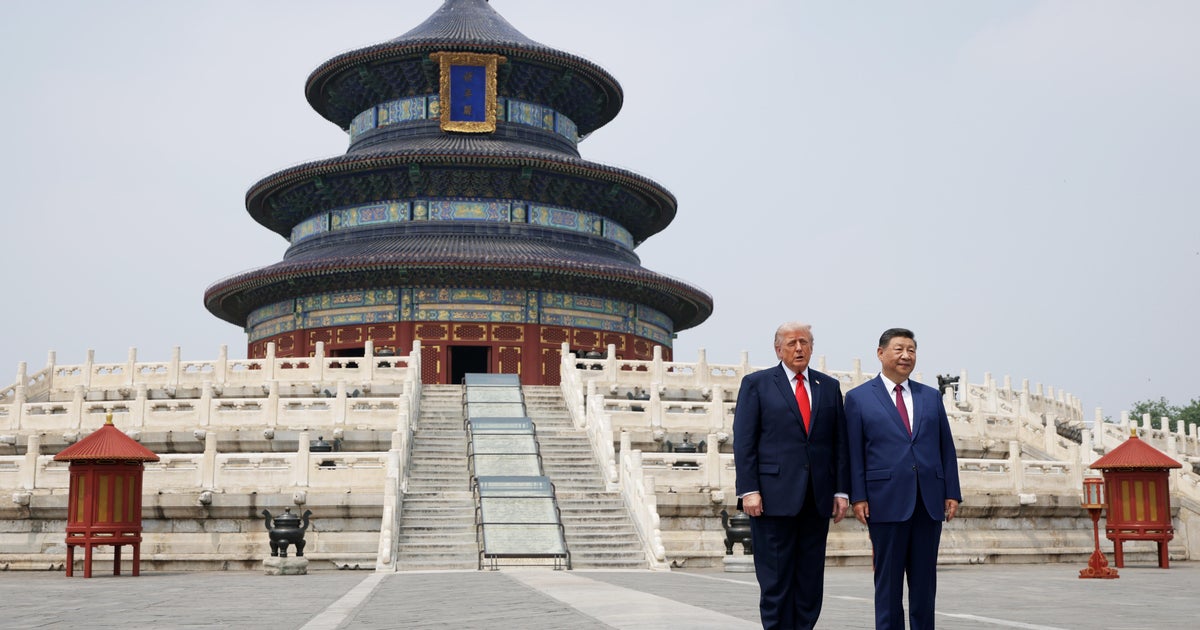
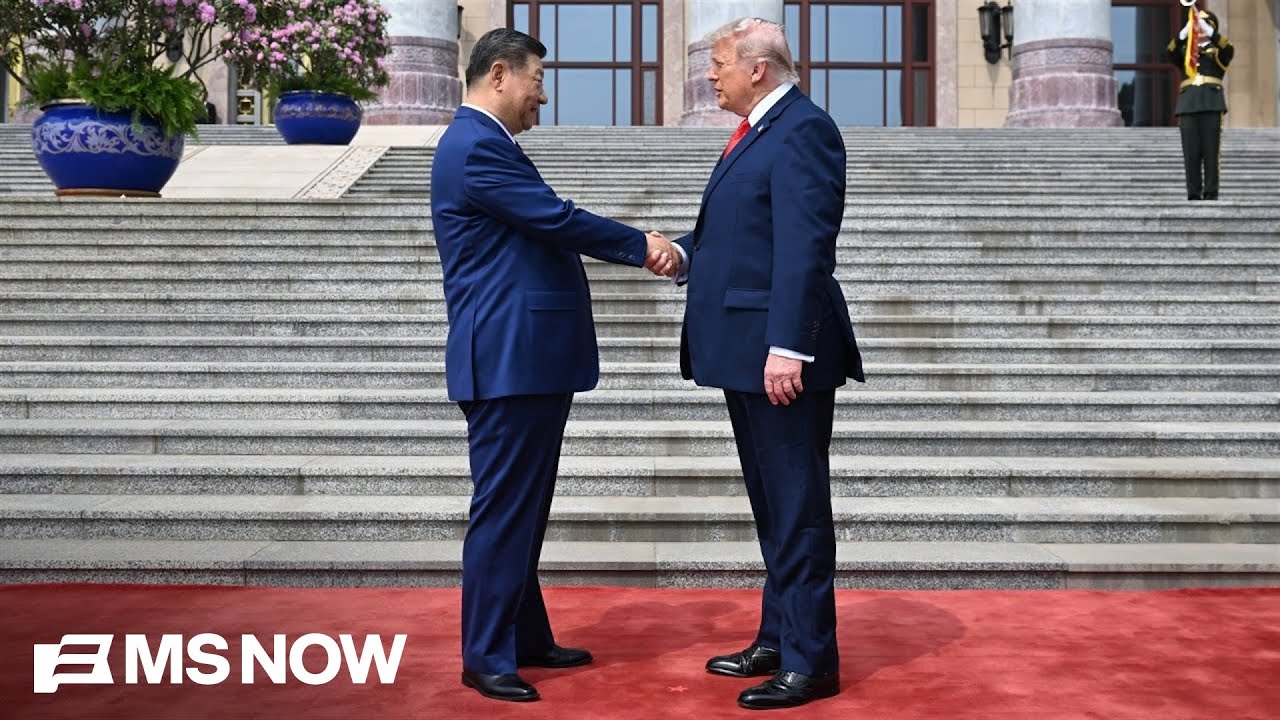
“So I really look forward to our discussion. It’s a big discussion. There are those who say this is maybe the biggest summit ever. […] It’s an honor to be your friend. And the relationship between China and the USA is going to be better than ever before.”
Video
— Visegrád 24 (@visegrad24) May 14, 2026
Breakingviews – Alibaba’s AI returns are more opaque than elusive reut.rs/42SXtxH reut.rs/42SXtxH
— @Reuters May 14, 2026
President Donald Trump spoke at the Great Hall of the People in Beijing, praising China shortly after Chinese President Xi Jinping’s address during the historic event.
For more context and news coverage of the most important stories of our day, click here: https://www.nbcnews.com
» Subscribe to NBC News: http://nbcnews.to/SubscribeToNBC
» Subscribe to Here’s the Scoop podcast: https://www.nbcnews.com/heres-the-scoop-daily-podcast
Every day, NBC News helps people understand what’s happening and why it matters — through fact-based reporting, meaningful conversations, and powerful stories. From its leading news broadcasts — TODAY, NBC Nightly News, Meet the Press, and Dateline — to NBC News NOW, the 24/7 streaming news channel, plus chart-topping podcasts, the NBC News app, and NBCNews.com, NBC News keeps audiences informed and connected to the stories shaping our world.
Connect with NBC News Online!
NBC News App: https://apps.nbcnews.com/mobile
Breaking News Alerts: https://link.nbcnews.com/join/5cj/breaking-news-signup?cid=sm_npd_nn_yt_bn-clip_190621
Visit NBCNews.Com: http://nbcnews.to/ReadNBC
Find NBC News on Facebook: http://nbcnews.to/LikeNBC
Follow NBC News on Twitter: http://nbcnews.to/FollowNBC
Follow NBC News on Instagram: http://nbcnews.to/InstaNBC
#china #donaldtrump #politics