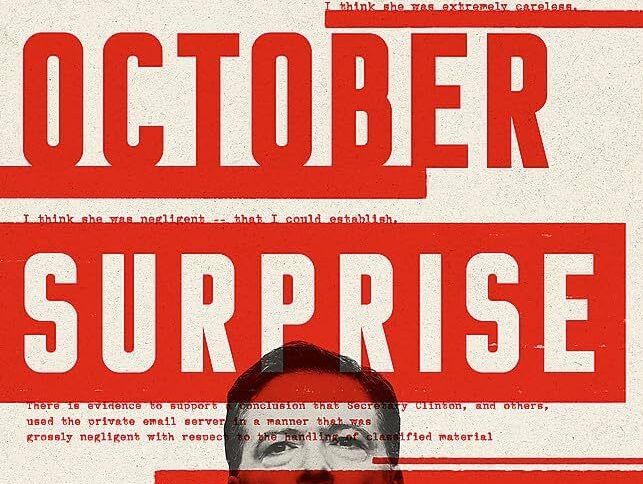
#FBI #Mueller #Legacy Mueller’s Complex, Unassessed Legacy – GS: google.com/search?q=Mueller%…Conversation with the Gemini: gemini.google.com/share/8f94… The legacy of Robert Mueller is one of the most intricately layered and debated subjects in modern American political history. Often viewed almost entirely through the polarizing lens of the Special Counsel investigation, a comprehensive assessment of his career requires looking […]
Day: March 24, 2026
#FBI #Mueller #Legacy Mueller’s Complex, Unassessed Legacy – GS: google.com/search?q=Mueller%…Conversation with the Gemini: gemini.google.com/share/8f94… The legacy of Robert Mueller is one of the most intricately layered and debated subjects in modern American political history. Often viewed almost entirely through the polarizing lens of the Special Counsel investigation, a comprehensive assessment of his career requires looking […]
#FBI #Mueller #Legacy
Mueller’s Complex, Unassessed Legacy – GS:
google.com/search?q=Mueller%…
Conversation with the Gemini:
gemini.google.com/share/8f94…
The legacy of Robert Mueller is one of the most intricately layered and debated subjects in modern American political history. Often viewed almost entirely through the polarizing lens of the Special Counsel investigation, a comprehensive assessment of his career requires looking at his role as a transformative intelligence architect, a rigid institutionalist, and a central figure in a deeply fractured political era.Here is an analysis of why Robert Mueller’s historical footprint remains complex and largely unassessed.
The Post-9/11 Intelligence Architect
Before 2017, Mueller’s legacy was firmly cemented in his 12-year tenure as the Director of the FBI. Taking office just exactly one week before the September 11, 2001 attacks, Mueller oversaw the most significant reorganization of the Bureau since the J. Edgar Hoover era.From Law Enforcement to Counterintelligence: Mueller engineered a massive cultural and operational shift within the FBI. He transitioned the agency from a reactionary domestic police force focused on bank robberies and organized crime into a proactive, intelligence-driven national security apparatus.
Expanding the Apparatus: Under his leadership, the FBI’s counterterrorism, counterintelligence, and cyber divisions were vastly expanded, fundamentally altering how the United States intercepts foreign intelligence threats and domestic plots.
The Surveillance Showdown: In 2004, Mueller (alongside then-Deputy Attorney General James Comey) famously threatened to resign over the Bush administration’s warrantless wiretapping program, a moment that cemented his bipartisan reputation as a defender of the rule of law over executive overreach.
The Special Counsel Era and the Russia Investigation
Mueller’s appointment in 2017 to investigate Russian interference in the 2016 election and potential links to the Trump campaign redefined his public profile. His final report detailed a sophisticated, multi-pronged influence operation led by Russian intelligence (specifically the GRU and the Internet Research Agency) to exploit American political psychology and fracture the electorate.However, the legacy of this investigation remains unresolved due to its highly nuanced conclusions and the polarized reception it received:
The Conspiracy Conclusion: The investigation firmly established that Russian interference occurred in a “sweeping and systematic fashion,” but it did not find sufficient evidence to charge a criminal conspiracy between the Trump campaign and the Russian government.
The Obstruction Dilemma: On the question of obstruction of justice, Mueller adhered strictly to the Justice Department’s Office of Legal Counsel (OLC) guidelines, which state that a sitting president cannot be indicted. Because he could not bring charges, he concluded it would be unfair to formally accuse the president of a crime he could not defend in court. He laid out the evidence but left the final judgment to Congress and the Attorney General.
Political Fallout: This rigid adherence to institutional norms frustrated observers across the political spectrum. Critics on the right viewed the lengthy investigation as a politically motivated attempt to undermine the administration. Critics on the left felt Mueller’s refusal to make a definitive prosecutorial judgment on obstruction was a failure of duty that allowed the findings to be easily spun by partisan actors.
The Institutionalist in a Hyper-Partisan Age
The core of Mueller’s unassessed legacy lies in the clash between his personal operating style and the modern political environment. Mueller is, by all accounts, a classic institutionalist—a former Marine who believes strictly in the chain of command, bureaucratic boundaries, and the silent execution of duty.He delivered a highly technical, legalistic report to a public and media ecosystem that demanded clear, televised moral victories or absolute exonerations. His subsequent congressional testimony, characterized by one-word answers and a refusal to stray beyond the four corners of his written report, highlighted the limitations of an institutionalist approach in an era driven by narrative, media soundbites, and intense political warfare.
The Unassessed Horizon
Ultimately, Mueller’s legacy cannot be fully written yet because the events he investigated and the institutions he shaped are still actively evolving. The political reverberations of his investigation continue to influence the American landscape, particularly as Donald Trump now navigates his second presidency, and the debate over the appropriate scope and power of federal law enforcement remains a central friction point in US politics.Furthermore, the counterintelligence framework Mueller built at the FBI continues to be tested daily by the very foreign intelligence services he investigated.
Would you like to explore the specific structural changes Mueller made to the FBI’s counterintelligence divisions, or look deeper into the legal precedents established by the Special Counsel’s approach to executive power?
The Complex and still Unassessed Legacy of Robert Mueller – GS
Mueller’s Complex, Unassessed Legacy
gemini.google.com/share/8f94… Opens in a new window
Created March 24, 2026 at 06:50 AMConversations with the Gemini
Al-Qaeda 9/11 Conspiracy Debunked
gemini.google.com/share/9610… Opens in a new window
Created March 23, 2026 at 09:34 AM
9/11 Investigation: Al-Qaeda, Not Soviets
gemini.google.com/share/3bf8…
Opens in a new window
Created March 23, 2026 at 09:22 AM
Mueller’s National Security and Election Roles
gemini.google.com/share/235c…
Opens in a new window
Created March 23, 2026 at 08:50 AM
Mossad’s October Surprise: Fact vs. Fiction
gemini.google.com/share/3002…
Opens in a new window
Created March 22, 2026 at 01:04 PM
Israel’s 2016 Election Influence Theory
gemini.google.com/share/4647…
Opens in a new window
Created March 22, 2026 at 08:03 AM
Election Interference: Russia, Israel, Mueller
gemini.google.com/share/3431…
Opens in a new window
Created March 22, 2026 at 07:18 AM
Election Interference: Russia, Israel, Mueller
gemini.google.com/share/f117…
Opens in a new window
Created March 22, 2026 at 06:37 AM
Iran, AI, and Internal CIA Shifts
gemini.google.com/share/b1bc…
Opens in a new window
Created March 21, 2026 at 02:54 PM
FBI Lawsuits, Comey Subpoenaed
gemini.google.com/share/cfde…
Opens in a new window
Created March 21, 2026 at 05:50 AM
Foreign Election Interference Debate
gemini.google.com/share/e052…
Opens in a new window
Created March 20, 2026 at 09:21 AM
Legacy of Robert MuellerPic.:Maddow rebukes Robert Mueller’s legacy as ‘wildly outmaneuvered’ following his death at 81 – AOL
google.com/search?num=10&new…— Michael Novakhov (@mikenov) Mar 24, 2026
Categories
https://t.co/kk6Vzv2x95
German military satellite plan fuels EU fragmentation fears https://t.co/sNEtSWK8SU https://t.co/sNEtSWK8SU
— Reuters (@Reuters) March 24, 2026
A 48‑hour ultimatum is now a five‑day cliff‑hanger, leaving markets guessing who’s actually talking behind the scenes. We break down why sentiment is still so fragile on today’s Morning Bid podcast https://t.co/AYeroNEyn2 pic.twitter.com/cwjtTV6EnI
— Reuters (@Reuters) March 24, 2026
Mueller’s Complex, Unassessed Legacy – Conversation with the Gemini:
gemini.google.com/share/8f94…The legacy of Robert Mueller is one of the most intricately layered and debated subjects in modern American political history. Often viewed almost entirely through the polarizing lens of the Special Counsel investigation, a comprehensive assessment of his career requires looking at his role as a transformative intelligence architect, a rigid institutionalist, and a central figure in a deeply fractured political era.
Here is an analysis of why Robert Mueller’s historical footprint remains complex and largely unassessed.
The Post-9/11 Intelligence Architect
Before 2017, Mueller’s legacy was firmly cemented in his 12-year tenure as the Director of the FBI. Taking office just exactly one week before the September 11, 2001 attacks, Mueller oversaw the most significant reorganization of the Bureau since the J. Edgar Hoover era.From Law Enforcement to Counterintelligence: Mueller engineered a massive cultural and operational shift within the FBI. He transitioned the agency from a reactionary domestic police force focused on bank robberies and organized crime into a proactive, intelligence-driven national security apparatus.
Expanding the Apparatus: Under his leadership, the FBI’s counterterrorism, counterintelligence, and cyber divisions were vastly expanded, fundamentally altering how the United States intercepts foreign intelligence threats and domestic plots.
The Surveillance Showdown: In 2004, Mueller (alongside then-Deputy Attorney General James Comey) famously threatened to resign over the Bush administration’s warrantless wiretapping program, a moment that cemented his bipartisan reputation as a defender of the rule of law over executive overreach.
The Special Counsel Era and the Russia Investigation
Mueller’s appointment in 2017 to investigate Russian interference in the 2016 election and potential links to the Trump campaign redefined his public profile. His final report detailed a sophisticated, multi-pronged influence operation led by Russian intelligence (specifically the GRU and the Internet Research Agency) to exploit American political psychology and fracture the electorate.However, the legacy of this investigation remains unresolved due to its highly nuanced conclusions and the polarized reception it received:
The Conspiracy Conclusion: The investigation firmly established that Russian interference occurred in a “sweeping and systematic fashion,” but it did not find sufficient evidence to charge a criminal conspiracy between the Trump campaign and the Russian government.
The Obstruction Dilemma: On the question of obstruction of justice, Mueller adhered strictly to the Justice Department’s Office of Legal Counsel (OLC) guidelines, which state that a sitting president cannot be indicted. Because he could not bring charges, he concluded it would be unfair to formally accuse the president of a crime he could not defend in court. He laid out the evidence but left the final judgment to Congress and the Attorney General.
Political Fallout: This rigid adherence to institutional norms frustrated observers across the political spectrum. Critics on the right viewed the lengthy investigation as a politically motivated attempt to undermine the administration. Critics on the left felt Mueller’s refusal to make a definitive prosecutorial judgment on obstruction was a failure of duty that allowed the findings to be easily spun by partisan actors.
The Institutionalist in a Hyper-Partisan Age
The core of Mueller’s unassessed legacy lies in the clash between his personal operating style and the modern political environment. Mueller is, by all accounts, a classic institutionalist—a former Marine who believes strictly in the chain of command, bureaucratic boundaries, and the silent execution of duty.He delivered a highly technical, legalistic report to a public and media ecosystem that demanded clear, televised moral victories or absolute exonerations. His subsequent congressional testimony, characterized by one-word answers and a refusal to stray beyond the four corners of his written report, highlighted the limitations of an institutionalist approach in an era driven by narrative, media soundbites, and intense political warfare.
The Unassessed Horizon
Ultimately, Mueller’s legacy cannot be fully written yet because the events he investigated and the institutions he shaped are still actively evolving. The political reverberations of his investigation continue to influence the American landscape, particularly as Donald Trump now navigates his second presidency, and the debate over the appropriate scope and power of federal law enforcement remains a central friction point in US politics.Furthermore, the counterintelligence framework Mueller built at the FBI continues to be tested daily by the very foreign intelligence services he investigated.
Would you like to explore the specific structural changes Mueller made to the FBI’s counterintelligence divisions, or look deeper into the legal precedents established by the Special Counsel’s approach to executive power?
The Complex and still Unassessed Legacy of Robert Mueller – GS
Mueller’s Complex, Unassessed Legacy
gemini.google.com/share/8f94… Opens in a new window
Created March 24, 2026 at 06:50 AMConversations with the Gemini
Al-Qaeda 9/11 Conspiracy Debunked
gemini.google.com/share/9610… Opens in a new window
Created March 23, 2026 at 09:34 AM
9/11 Investigation: Al-Qaeda, Not Soviets
gemini.google.com/share/3bf8…
Opens in a new window
Created March 23, 2026 at 09:22 AM
Mueller’s National Security and Election Roles
gemini.google.com/share/235c…
Opens in a new window
Created March 23, 2026 at 08:50 AM
Mossad’s October Surprise: Fact vs. Fiction
gemini.google.com/share/3002…
Opens in a new window
Created March 22, 2026 at 01:04 PM
Israel’s 2016 Election Influence Theory
gemini.google.com/share/4647…
Opens in a new window
Created March 22, 2026 at 08:03 AM
Election Interference: Russia, Israel, Mueller
gemini.google.com/share/3431…
Opens in a new window
Created March 22, 2026 at 07:18 AM
Election Interference: Russia, Israel, Mueller
gemini.google.com/share/f117…
Opens in a new window
Created March 22, 2026 at 06:37 AM
Iran, AI, and Internal CIA Shifts
gemini.google.com/share/b1bc…
Opens in a new window
Created March 21, 2026 at 02:54 PM
FBI Lawsuits, Comey Subpoenaed
gemini.google.com/share/cfde…
Opens in a new window
Created March 21, 2026 at 05:50 AM
Foreign Election Interference Debate
gemini.google.com/share/e052…
Opens in a new window
Created March 20, 2026 at 09:21 AM
Legacy of Robert Mueller— Michael Novakhov (@mikenov) Mar 24, 2026
Valero’s Port Arthur, Texas, refinery, hit by fire, local media reports reut.rs/4btq5T8 reut.rs/4btq5T8
— Reuters (@Reuters) Mar 24, 2026