NPR News: 12-20-2025 9PM EST Learn more about sponsor message choices: podcastchoices.com/adchoices NPR Privacy Policy
Categories
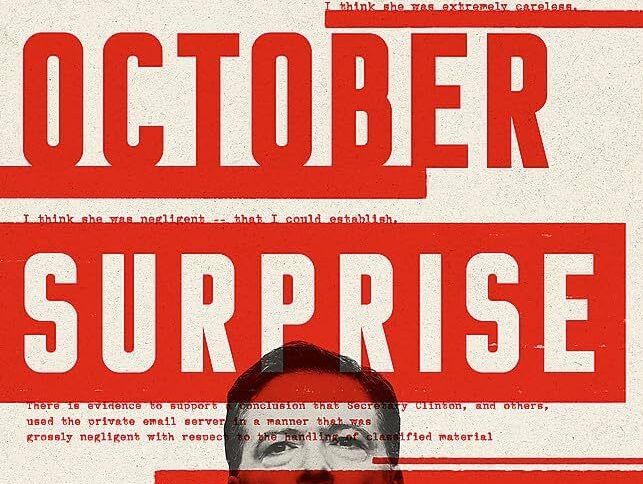 October Surprise 2016 - octobersurprise2016.org
If Russia does ever triumph over Ukraine, history will observe that Western Europe and the United States lacked the will to do more than half-measures to block the Kremlin’s imperialism.
on.wsj.com/4j2vt1y— Wall Street Journal Opinion (@WSJopinion) Dec 21, 2025
#Crime #Reiner #Hollywood
“NewsNation Prime” is America’s source for unbiased news offering a full range of perspectives from across the U.S. Weekends starting at 7p/6C. #Prime
NewsNation is your source for fact-based, unbiased news for all Americans.
More from NewsNation: https://www.newsnationnow.com/
Get our app: https://trib.al/TBXgYpp
Find us on cable: https://trib.al/YDOpGyG
How to watch on TV or streaming: https://trib.al/Vu0Ikij
Lakers’ Marcus Smart fined $35,000 for obscene gesture reut.rs/3Y8sE5D reut.rs/3Y8sE5D
— Reuters (@Reuters) Dec 21, 2025
𝗧𝗵𝗲 𝘀𝗲𝗶𝘇𝘂𝗿𝗲 𝗼𝗳 𝘁𝗵𝗲 𝘁𝗮𝗻𝗸𝗲𝗿 𝗖𝗲𝗻𝘁𝘂𝗿𝗶𝗲𝘀 𝗶𝘀 𝗯𝗲𝗶𝗻𝗴 𝗳𝗿𝗮𝗺𝗲𝗱 𝗮𝘀 𝘀𝗮𝗻𝗰𝘁𝗶𝗼𝗻𝘀 𝗲𝗻𝗳𝗼𝗿𝗰𝗲𝗺𝗲𝗻𝘁.
𝗜𝘁 𝗶𝘀 𝗮𝗰𝘂𝘁𝗮𝗹𝗹𝘆 𝗮 𝗰𝗮𝘀𝗲 𝘀𝘁𝘂𝗱𝘆 𝗶𝗻 𝗮𝘀𝘆𝗺𝗺𝗲𝘁𝗿𝗶𝗰 𝗽𝗼𝗹𝗶𝗰𝘆.“Maduro might conclude the safest move is to declare war on Ukraine and side with Russia. That seems to be the threshold at which U.S. oil enforcement against shadow tankers stops.” – OSINT Intuit™
On December 20, 2025, the U.S. Coast Guard boarded and seized the Panamanian-flagged supertanker Centuries after it departed Venezuela, reportedly carrying up to two million barrels of Venezuelan crude. Reporting indicates the cargo was owned by a Chinese trading entity.
This was not a routine sanctions check. Under the current U.S. administration, Washington has announced and implemented a de facto maritime blockade targeting Venezuelan oil exports. The seizure of Centuries reflects a deliberate policy choice to apply direct, physical enforcement at sea, including boarding and seizure, to remove Venezuelan oil from the market.
The involvement of China adds a critical dimension, because China is not a neutral energy buyer. Chinese purchases of Russian crude are a primary revenue stream sustaining Moscow’s war economy, funding weapons production, mobilization, and long-term war endurance in Europe. Yet Russian oil continues to flow to China at scale with no U.S. maritime interdiction.
By contrast, Venezuelan shipments are interdicted aggressively. The enforcement pattern is difficult to ignore. Chinese purchases of Russian oil are met with administrative and financial pressure, while Chinese purchases of Venezuelan oil are met with boarding, seizure, and forced disruption. Venezuela is treated as expendable. Russia is treated as strategically untouchable.
This is not about maritime law, geography, or sanctions mechanics. It is about policy choice. The United States has demonstrated both the capability and willingness to conduct high-seas interdictions, but has chosen to apply that force selectively.
In the case of Moscow, policy appears driven less by conventional security thresholds and more by transactional risk management. Decisions associated with the current administration suggest a preference for managing relations with Russia through transactional economic enticement rather than actions that would directly interfere with Russia’s core revenue streams.
Under this approach, physical interdiction is acceptable when it targets peripheral actors and secondary theaters, but avoided when it would disrupt what is treated as politically off-limits. That choice explains the asymmetry more clearly than any discussion of law or logistics.
Bottom line: The Centuries seizure exposes an asymmetric approach. The United States is willing to impose real, immediate costs on China when those costs do not materially threaten Russia’s primary war-funding lifeline. When they do, the tools of direct confrontation are withheld.
That asymmetry is not accidental.
— OSINT Intuit™ (@UKikaski) Dec 21, 2025
The post MATLAB Online – MATLAB & Simulink – MathWorks first appeared on The South Caucasus News – SouthCaucasusNews.com.