Our Sponsor: If you’re concerned about inflation, the markets, or where things are headed, take a minute to check this out.📞 Call (833) 2-USAGOLDor🌐 Visit…
Categories
 October Surprise 2016 - octobersurprise2016.org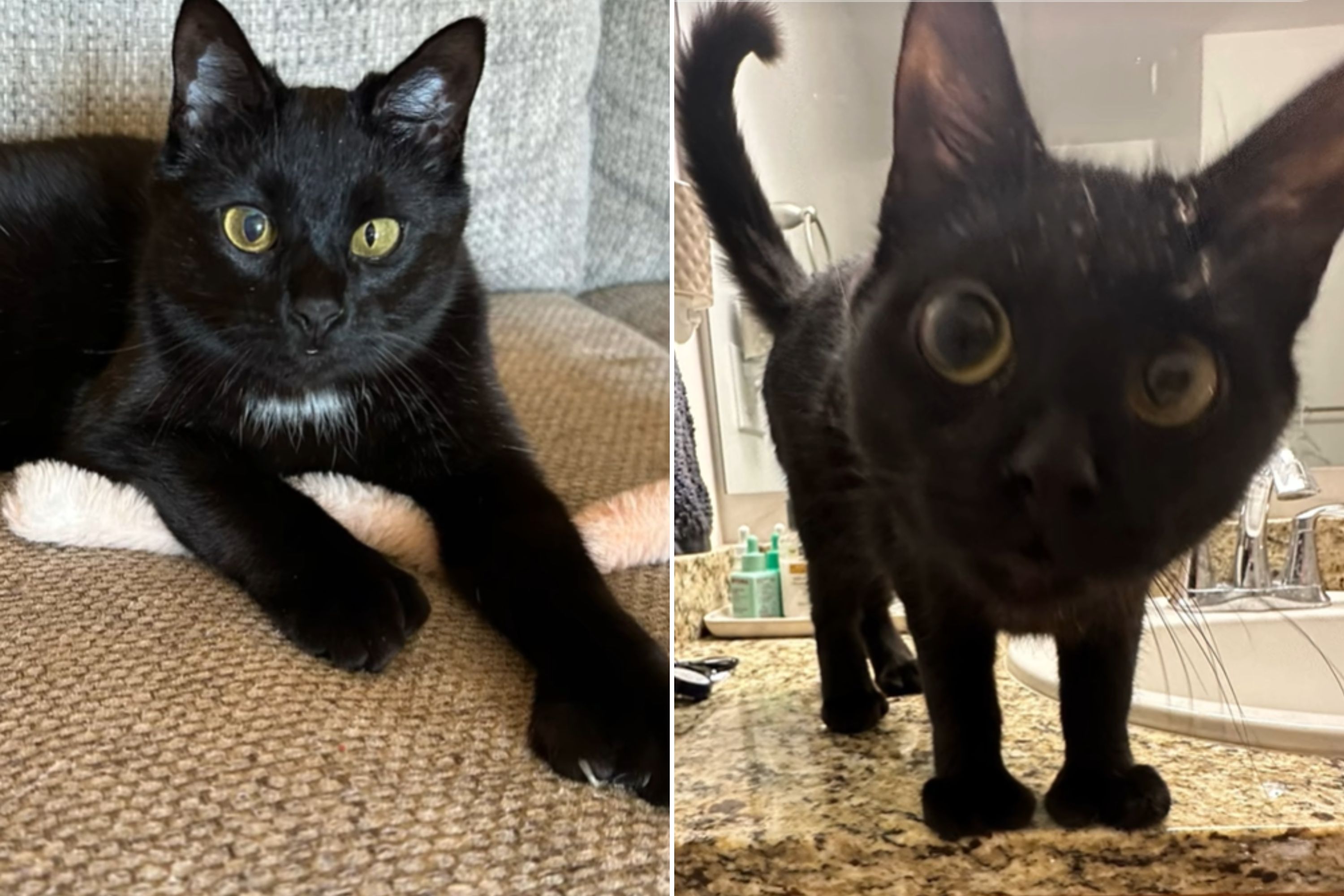
The post Couple adopt kitten, quickly realize something isn’t quite right first appeared on The Brooklyn Times – bklyntimes.com.
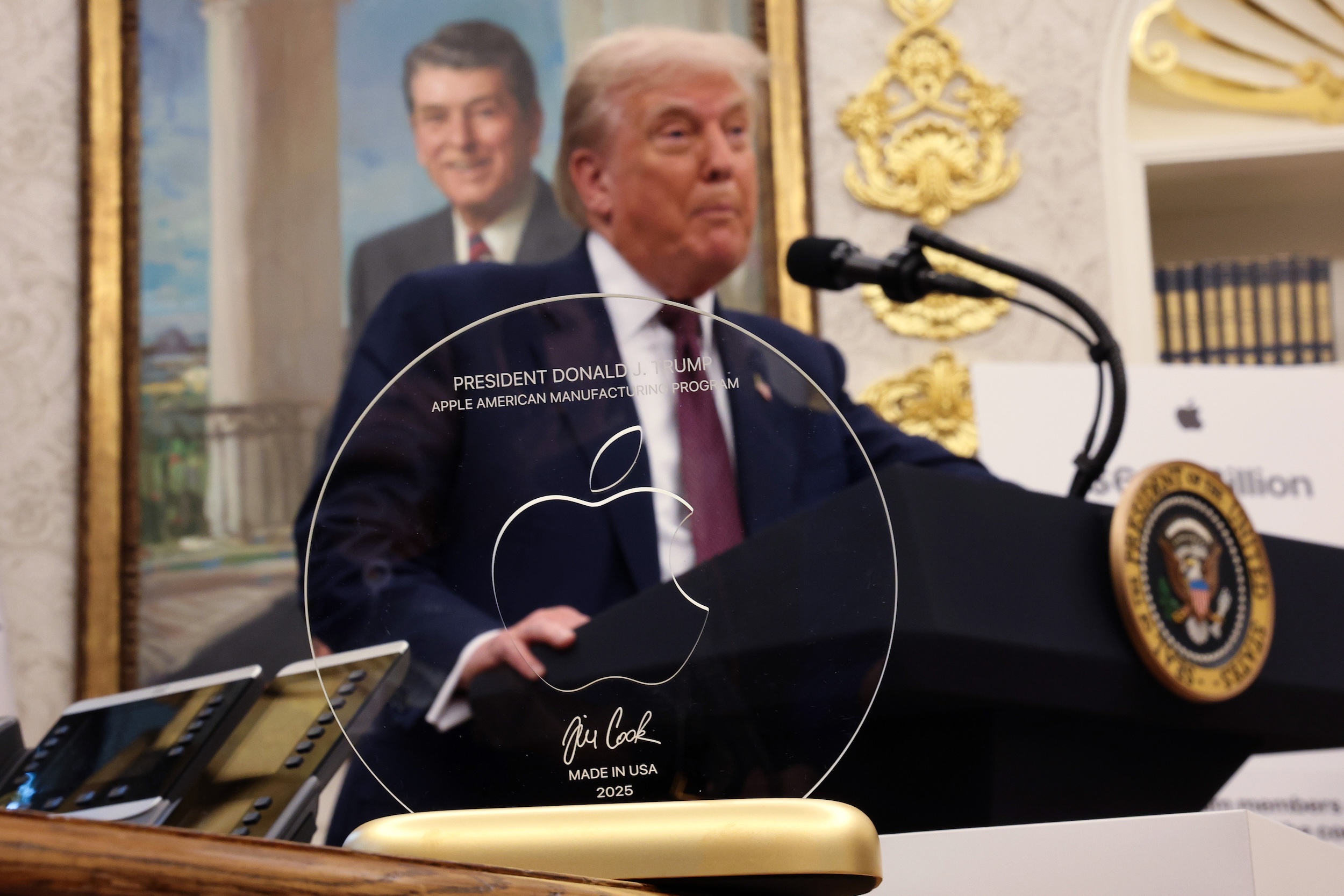
The post Trump’s America Is Starting To Look Like a Banana Republic first appeared on The Brooklyn Times – bklyntimes.com.
Secretary of State Thomas Jefferson and Congressman James Madison, Republicans of Virginia, took a lengthy trip through northern climes together in the spring of 1791. Contemporaries surmised that the two of them had in mind to invigorate the Republican proto-party of which they were understood to be the leaders. Louis P. Masur’s exquisite little book A Journey North: Jefferson, Madison, & the Forging of a Friendship shows that they did far more than that.
Masur refers to the Virginians’ northern sojourn as “a gambol through upstate New York and parts of New England” and what we would nowadays call an opportunity for them to recharge their batteries. Their ongoing conflict with Alexander Hamilton’s Federalist party had somewhat dampened their spirits, and a bit of sightseeing would perhaps reinvigorate these prominent political contestants—even if it is somewhat difficult to imagine James Madison in so light-hearted a mood as to be gamboling. Masur’s other description of the journey as an “excursion, maybe an adventure” is more apt. They did do some work along the way, the author avers, as their sightseeing at Revolutionary battlefields and meetings with local eminences perforce had political implications.
In his prologue, Masur shows that Jefferson, at least, had in mind traveling with a companion from an early age. For example, he asked John Page—a young friend and future Virginia governor—whether he had in mind to travel: “If you have,” Jefferson told him years before the Revolution, “I shall be glad of your company.” As Page would not join him, Jefferson had to wait until he was posted several years later to represent the Confederation Congress in Europe to take in the sights in much of England and France. Of rural France, he wrote, “I am now in the land of corn, wine, oil, and sunshine. What more can man ask of heaven?” He counseled a younger kinsman that traveling “makes men wiser, but less happy.” As he was likely to learn to value his homeland less if he traveled abroad, Jefferson opined that the younger man should just take in American sights: “There is no place where your pursuit of knowledge will be so little obstructed by foreign objects as in your own country, nor any wherein the virtues of the heart will be less exposed to be weakened.”
One suspects that spending time together was what the two rising statesmen enjoyed most about their voyage.
James Madison was loath to undertake significant travel. He first rejected an invitation from Jefferson to spend much of 1784 in France and then the following year turned down James Monroe’s invitation to accompany him to the Ohio territory. Monroe’s suggestions of Montreal and Quebec sojourns drew no more positive a response. In 1784, however, Madison did accompany the Marquis de Lafayette to New York and up the Hudson River (which he had visited before). He told Jefferson in the wake of this journey that he would like to see “the eastern states,” i.e., New England, on the first convenient occasion.
Masur provides a kind of précis of Jefferson’s life prior to the trip with Madison, capturing all of the main points in a slight space and giving a good impression of the older man’s personality along the way. A substantial deepening of the two men’s friendship followed the death of Jefferson’s wife, particularly as the two shared time together in Philadelphia between that lamentable event and Jefferson’s departure for diplomatic duty in France. In 1784, not for the last time, Jefferson tried to persuade Madison to establish an abode close to Monticello.
Their political relationship is also succinctly presented. Like most Federalists of the 1780s, Madison was aghast at Shays’ Rebellion; Jefferson, away in France, found something very un-French to admire in Berkshires Massachusetts men’s tax resistance. A similar impulse left Jefferson quite skeptical of the proposed United States Constitution, which his friend had played the lead role in writing. To placate Orange County Baptists, Jefferson, Governor Edmund Randolph, George Mason, and George Nicholas, Madison took up Jefferson’s dear cause of constitutional amendments. Masur’s account of these matters, familiar to students of the men and the period, is brief and clear. So too that of the Jefferson/Madison-led Republican Party’s opposition to Treasury Secretary Alexander Hamilton’s program.
Some of the material Masur includes is of interest to students of Jefferson, Madison, and the United States in this period, though not likely to people solely interested in the Northern Sojourn of 1791. For example, the story of the slave James Hemings’ service to Jefferson in Virginia and France, besides his eventual emancipation in America and ultimate suicide, has little to do with the events of 1791. So too the imbroglio over publication of Jefferson’s comment on a copy of Tom Paine’s “Rights of Man” that it would counteract certain “political heresies which have sprung up among us.” The “heresies” he had in mind had been endorsed by Vice President John Adams, whom Jefferson certainly did not intend to contradict in so direct a manner before the public—yet here it was. Masur seems to include these marginally relevant tales just because he finds them interesting. (The Paine tale ends with an observation that Timothy Pickering was due to have a distinguished career, which is one way to describe it.)
We are told after this that Madison and Jefferson fell into “the very party system that they dreaded,” and by the end of the same paragraph, Madison says that party disputation “could not be prevented,”—which anyone familiar with his famous Federalist #10 would find totally unsurprising. Jefferson stooped to secret partisan machinations and lied to President Washington about being involved, as the President surely must have known. That the two Republican chieftains dined with prominent administration critics before their departure to the north cannot have allayed anyone’s suspicions.
“No question,” Masur says, “politics was on everyone’s mind” as our heroes began their journey. “Jefferson and Madison’s tour through Federalist New England undoubtedly reinforced for them the necessity of taking a firm public stand against what they saw as the heresies of the day. Yet, in the end, politics was not their main purpose.” “Health, recreation, and curiosity,” said Madison, prompted their trip. What else might we expect him to have said?
From then on, each chapter of the book about the journey itself is titled to refer to one of the main matters of interest to Jefferson and Madison as they made their way. Jefferson famously was a man of encyclopedic interests, and Madison, too, could be prompted to take up matters of fascination. While we are prone to think of them now as among the premier politicians in the country’s history, both of them were first substantial farmers, of course, and one of the purposes of their journey was to investigate the problems posed to American agriculture by the Hessian fly.
Masur provides information about the new pest’s appearance in Europe, about Jefferson’s role in spurring the American Philosophical Society to investigate the Hessian fly, about the questions regarding the fly—when it first appeared, whether it grew from egg or worm, the type(s) of wheat it attacked, how it had been successfully fought—to ask people along their route. “Jefferson’s most extensive writing” on the trip, we learn, “was his notes on the Hessian fly.” “They are never in the grain or chaff,” he jotted, likely irked by the British government’s measures to exclude American wheat imports. Though an amateur scientist, Jefferson was a notable one. In his leisure time, he did significant mental work, and Madison was right along with him. Much of their recreation on the trip had practical application.
Masur also describes Jefferson’s relationships with one of his daughters and a slave, as shown on this trip. Rather than a single narrative account, the book presents a timeline with several points of interest along it, at which the author delves into related, sometimes distantly related, matters. The “forging of a friendship” in the book’s title does not exactly capture the book’s content. For example, there are sections on Jefferson’s relationship with his younger daughter and on the slave man he took with him to France, neither of which is related to the older man’s relationship with James Madison.
A substantial section on Madison and slavery, though interesting, is not much about the men’s friendship either. Like Jefferson, he thought seriously about slavery, and Masur considers his record in this regard. Like many other Upper South liberals of his day, Madison believed that the sole practicable solution to the slavery problem was to find someplace to which American slaves could be sent. While Masur’s account of this matter will hold the interested reader’s attention, it is not obviously related to the book’s supposed theme.
In sum, A Journey North ably tells the story, with substantial digressions, of the northern trip James Madison and Thomas Jefferson took in 1791. Perhaps the most memorable aspect of this well-written little book is the story of Jefferson’s leaving his walking stick to Madison “as a token of the cordial and affectionate friendship which for nearly now an [sic] half century, has united us in the same principles and pursuits of what we have deemed for the greatest good of our country.” Masur illustrates it with a photo of the stick, which Madison returned to Thomas Jefferson Randolph, Jefferson’s favorite grandchild, thus accounting for its presence at Monticello today. One suspects that spending time together was what the two rising statesmen enjoyed most about their voyage.
The post A Republican Excursion first appeared on The News And Times Review – NewsAndTimes.org.

When the city of Seattle contacted Fusus, one of the nation’s leading police surveillance tech companies, in 2023, a company exec did more than just send over a brochure — he offered to connect Seattle with a “peer” in Atlanta’s police department who was familiar with the company’s products.
This kicked off months of communication between Claudia Gross-Shader, a director in Seattle’s city auditor’s office, Marshall Freeman, who was introduced as the deputy chief administrative officer of the Atlanta Police Department, and other Seattle officials.
Seattle was hoping that Fusus’s Connect system — which ties together license plate readers, public cameras, and privately owned cameras into a single surveillance platform — could help them combat retail theft. The next year, after a Seattle Police Department project manager visited Atlanta to see the system in action, Fusus sealed the deal: Seattle signed a contract for “Connect Seattle” at an estimated price tag of $1.8 million.
But what Gross-Shader and the rest of her colleagues in Seattle didn’t know — until The Intercept called with questions — was that Freeman was wearing two hats the whole time they were talking: The APD official was not only a consultant for Fusus, he was also a board member and owner of a small share of the company that could be worth millions.
“He never disclosed that to me!” Gross-Shader told The Intercept, after hearing about Freeman’s involvement with the company. She said everyone in Seattle who spoke with him was “duped,” and that knowing about his role “would have affected our procurement decision.”
An Intercept investigation, based on public documents and a City of Atlanta ethics investigation, has found that Freeman didn’t disclose his role with Fusus in conversations with at least 14 other cities during a period spanning at least two years, and at least nine of those cities went on to make or amend millions of dollars worth of contracts with Axon Fusus — the company’s name since Axon, the company behind the Taser and a major vendor of bodyworn cameras and other police surveillance systems, purchased Fusus last year.
Atlanta’s ethics investigation, which began in March 2024 and concluded in May of this year, was prompted by email queries and reporting from the Atlanta Community Press Collective, a local digital outlet. Investigators found that Freeman’s conversations with other cities, his undisclosed position on the board, his stake in the company, and his appearances at public events about Fusus software violated the city’s public employee laws regarding disclosure and use of city property and also created “an appearance of impropriety.” Freeman is appealing the decision.
But the Atlanta investigation, despite taking 15 months to complete, did not cover the full extent of Freeman’s activities. It did not follow-up to see whether the cities that Freeman spoke with went on to buy Fusus products, did not inform the officials he visited or spoke with about his dual roles, failed to turn up multiple Axon Fusus events around the country where Freeman spoke, and missed the fact that Freeman was a director on Fusus’s main governing board.
Neither Freeman, his attorney Joe Siegelman, nor Axon Fusus responded to queries from the Intercept.
Freeman told Atlanta ethics investigators that he stopped consulting with the company after Axon’s purchase of Fusus in January 2024. He did this, he told investigators, to avoid conflicts of interest because Axon has contracts with the city of Atlanta. But public documents show that Freeman has served on the company’s board as a director since at least January of 2023 and remained in that position until the most recently available filings, dated June 24 of this year.
That means Freeman was on the company’s board, for example, when he spoke at “Axon Week” on April 25 in Phoenix. Introduced by company CEO Rick Smith as an APD official and “a wonderful partner with us over the years,” Freeman’s name flashed across a huge screen. “I’m proud to be here representing the men and women of the Atlanta Police Department,” he told attendees. “Axon has been such a trusted partner in our journey to modern public safety.” After concluding his remarks, the two embrace, and Smith says, “It’s been a great relationship.”
Freeman told investigators that he didn’t think his work with Fusus presented a conflict of interest before Axon acquired the company because the City of Atlanta did not contract directly with Fusus, and instead relied on the city’s private police foundation — where he worked before joining the city — to purchase the company’s technology. Atlanta began developing its “Connect” system using Fusus and other technology in 2021, and has since become what a tech publication would later call “the most surveilled city” in the United States.
The ethics report, in a seeming misunderstanding of public filings, identified Freeman as serving on the board only in its “Virginia and Florida-based subsidiaries.” But filings in those states, and seven more, show that Freeman is a director of Fusus itself, which continues to operate with its own board of directors even after the Axon acquisition.
The Intercept discovered that cities that expanded or created contracts involving Axon Fusus’s signature Connect systems, and who also spoke with Freeman, include Seattle; New York City; Sacramento; Savannah, Georgia; Springfield, Illinois; Omaha, Nebraska; and Birmingham, Alabama.
The exact value of these contracts is difficult to pin down, because some cities do not publish their contracting data and others did not itemize the portion of the contract linked to Fusus’s “Real-Time Crime Center” technology. The financial impact of Freeman’s enthusiastic testimonials about the “Connect” system and Fusus generally at events in which he was billed as an Atlanta police official, with hundreds of police departments and cities in attendance, is also difficult to quantify.
New York City Police Department detective Joseph Raffaele emailed Freeman on September 11, 2023, telling him the department was “considering purchasing [Fusus’] service.”
“We would appreciate your opinion on Fusus,” Raffaele continued. “If you don’t mind, please fill in the attached excel spreadsheet and email it back to me. The NYPD just would like a gauge of how good Fusus is. Their customer service, and any general issues you may have had?”
He then forwarded his response to Fusus CEO Christopher Lindenau.
Less than two hours later, Freeman filled out and returned the spreadsheet, adding in an email to Raffaele, “As you will note from my responses, we are HUGE fans of Fusus … [and] our officers and investigators rely on Fusus around the clock every day. It would be impossible for us to be as effective without it.” He then forwarded his response to Fusus CEO Christopher Lindenau, who replied, “Thank you sir!!!”
All references to such emails in this story come from the Atlanta ethics office’s report.
The Intercept has obtained a recording of Atlanta ethics investigators interviewing Freeman on June 12 of last year. At one point, Freeman says, “We share with other cities all the time how we utilize the technology. So it’s not being an advocate for Fusus, saying, ‘You should buy this.’ I never did that.”
Freeman told investigators that Atlanta’s system using Fusus “is what America is looking to mimic,” adding, “There’s ‘Connect’ everywhere.”
In May of last year, New York City Mayor Eric Adams announced a $1.5 million contract with Fusus. “Connect New York” now has nearly 7,000 public and privately owned cameras linked to the city’s surveillance system. The NYPD did not reply to a request for comment from the Intercept.
Not everyone in New York sees the new surveillance system as the “home run” Adams called it in his press conference announcing the contract.
“This silent expansion of surveillance casts a long shadow over our public housing communities, places that should feel like home, not a monitored zone,” Council Member Shahana Hanif, who asked about the Fusus system in a city council meeting last year, told the Intercept. “We must demand full disclosure, democratic oversight, and a halt to unchecked policing embedded within our basic infrastructure.”
Freeman followed the same playbook when the police in Sacramento got in touch.
Sacramento Police Department Lt. Jason Start emailed Freeman on September 15, 2023, letting him know Fusus public safety adviser Jim Macedo had suggested contacting him because the department was “upgrading hardware and software” in their surveillance system, according to the Atlanta ethics investigation.
“I was the purchaser of Fusus and directed much of this from my end,” Freeman wrote back. “It would likely make sense for us to have an initial chat.” He was referring to his previous role as COO of the Atlanta Police Foundation, where Freeman oversaw the private organization’s purchase of Fusus technology on behalf of the city, before starting work at APD in January 2023.
Several months after his first email to Freeman, Start wrote in another email that he planned to visit Atlanta on November 29 with a group of six or seven. Less than a year later, in October 2024, Sacramento signed a $300,000 contract with Fusus, according to the Sacramento Bee.
When The Intercept reached Start on the phone, he said he had retired and hung up. The department declined to comment. “Connect Sacramento” now has about 2,000 cameras linked to the city’s surveillance system.
In Georgia, several hours southeast of Atlanta, Savannah IT Project Manager Jacque Fountain emailed Freeman August 29, 2023, referring to a conversation the two had the day before and how the “Savannah PD would like to implement Fusus.”
Within two months, in October, the city announced a contract worth $150,000 a year with the company. The contract was renewed in February. Reached on the phone, Fountain said she “was not aware” of Freeman’s ties with Fusus. She referred The Intercept to the city’s public information office, who didn’t answer queries about the Atlanta police official’s communication with the city.
Savannah now has more than 10,000 cameras linked to the city’s surveillance system.
In Springfield, the capital of Illinois, Fusus public safety adviser Jack Howard emailed Assistant Chief Joshua Stuenkel on February 7, 2023, introducing Freeman as a “long-time partner” of the company and explaining his former role at the police foundation.
The Springfield City Council approved a $3.4 million contract in November allocating money to the police department that includes Fusus’s services. It is unclear how much of the contract will go to the city’s “Real-Time Crime Center.” Stuenkel told The Intercept, “I don’t recall meeting with [Freeman]. We didn’t use him. I think we’re done.”
On January 25 of last year, retired Omaha Police Department Lt. James Pauly emailed Freeman, telling him he was “honored that you allowed Fusus to share your information with us.” Fusus had been registered with Nebraska’s secretary of state since the year before, with Freeman listed as a director. Reached on his cellphone, Pauly said, “You would think that would be a conflict of interest,” before directing The Intercept to the Omaha Police Department, who didn’t respond to a query.
The city entered into a $22 million, 10-year contract in August, which included Fusus technology for its “Connect” system.
Seattle is currently considering a $1 million expansion to its Fusus-powered surveillance system; four community meetings on the proposal were scheduled in August.
Seattle’s Surveillance Advisory Working Group, which is authorized by city law to evaluate city surveillance contracts and their potential impact on issues such as civil rights and civil liberties, produced a report in July of last year with five of six members opposing the “Connect Seattle” plan. Their concerns ranged from “disparate impacts … on minority communities” to a lack of specific information on the technology.
René Peters, who was co-chair of the group at the time and works at AI chipmaker NVIDIA, said the city ignored his group’s report. At one city council meeting last year, a police official got several hours to make a presentation on the proposed surveillance system, while Peters was given just one minute of public comment despite his group’s official watchdog role.
When told about Freeman’s role in communicating to Seattle about Fusus, Peters said, “If we had had that information, there would have been a lot more people at city council meetings, and demonstrations [against the proposal].”
Gross-Shader highlighted the difference between sharing information with peers and a salesperson. “If you’re a peer jurisdiction talking to someone from another peer jurisdiction, you assume you’re speaking to another public servant,” she said. “Not an agent of a for-profit corporation.”
“He’s trusted, and it was a betrayal of that trust, because [Seattle employees] thought he was a public servant,” she added. “It’s disturbing that a public servant would do that — and that a tech company would not disclose the relationship.”
Gross-Shader also noted that the city had not seen research demonstrating the ability of Fusus’s technology to play a significant role in reducing retail theft, the issue that originally brought her to look into the company.
“In the absence of rigorous evaluations … it’s a practical matter for jurisdictions,” she said. “You weigh the experience of other jurisdictions. But if somebody has undisclosed financial interests, how can we trust what they offer as their experience?”
The post “Duped”: How One Atlanta Cop Secretly Shilled for Police Tech appeared first on The Intercept.
The post “Duped”: How One Atlanta Cop Secretly Shilled for Police Tech first appeared on Audio Posts – audio-posts.com.
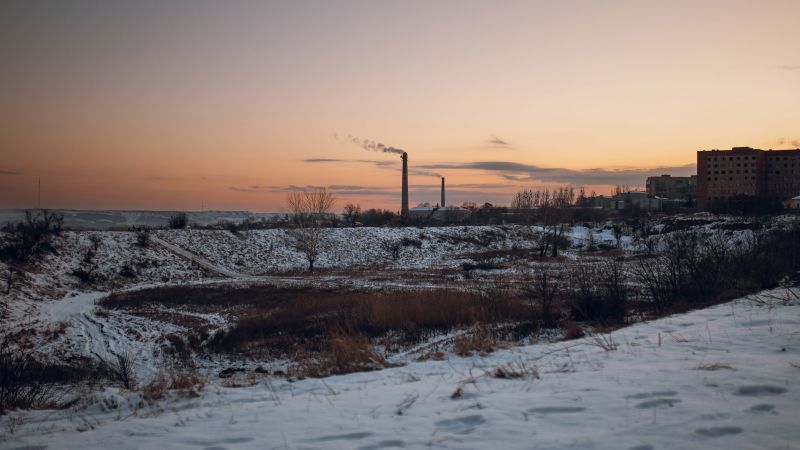
Putin just confirmed: RUSSIA WILL TARGET UKRAINE’S ENERGY INFRASTRUCTURE.
“Moscow remained patient for a long time and did not respond to Ukrainian attacks on our energy facilities. Now it has begun to respond seriously.” pic.twitter.com/rEYcmMHelN
— KyivPost (@KyivPost) September 2, 2025
Putin just confirmed: RUSSIA WILL TARGET UKRAINE’S ENERGY INFRASTRUCTURE.
“Moscow remained patient for a long time and did not respond to Ukrainian attacks on our energy facilities. Now it has begun to respond seriously.” pic.twitter.com/rEYcmMHelN
— KyivPost (@KyivPost) September 2, 2025