
EADaily, 10 августа 2025. Польские СМИ устроили истерику по поводу визита в Калининградскую область министра обороны России Андрея Белоусова. «Он на границе с Польшей!», — главный посыл истерики.
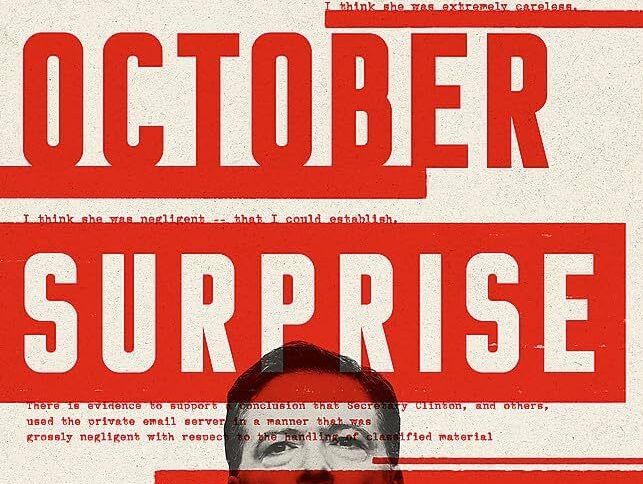 October Surprise 2016 - octobersurprise2016.org
In a significant development within UK-French relations, Keir Starmer and Emmanuel Macron announced a transformative migrant agreement during a press conference on July 10, 2025, in London. The deal, structured to facilitate the return of 50 irregular migrants to France weekly while allowing for an equal number of verified asylum seekers to enter the UK, marks a pragmatic shift in tackling the ongoing small-boats crisis, reports 24brussels.
This initiative emerges as a response to escalating concerns surrounding migratory pressures, demonstrating Starmer’s Labour government’s commitment to resolving these challenges through cooperative strategies rather than mere political posturing.
Set to commence shortly after its announcement, the deal stipulates that by August 5, the UK will return up to 50 migrants each week, a critical measure aimed at addressing the perilous journeys undertaken by those crossing the Channel. In exchange, Britain will process and accept a corresponding number of asylum seekers with familial connections in the UK, effectively establishing a reciprocal system.
The “one in, one out” system is designed to disrupt the operations of people-smuggling networks by introducing a tangible deterrent against dangerous crossings. This approach contrasts starkly with the controversial Rwanda policy, previously associated with Starmer’s predecessor, which prioritized punitive measures over humane alternatives.
However, skepticism surrounds the deal’s efficacy. According to Home Office statistics, there were over 25,000 Channel crossings by July 2025, a substantial increase from the previous year, leading to concerns about the limited impact of returning 50 migrants weekly.
Critics including Nigel Farage have branded the agreement a “Brexit humiliation,” reflecting on the perceived failures stemming from the UK’s departure from the EU. Nonetheless, such critiques overlook the long-term objectives of the deal, which aims to establish trust, test viability, and ultimately create scalable solutions amidst the migratory impasse.
The legacy of Brexit complicates the current landscape; the UK’s exit from the EU’s Dublin Regulation in 2020 eliminated its capacity to return migrants to their first safe entry point. This shift has strained diplomatic ties with France, exacerbating cross-Channel migration challenges, as noted by Macron.
Starmer’s rapport with Macron has improved Anglo-French relations, resulting in a long-awaited bilateral framework that the previous Conservative governments struggled to establish. The success of this agreement is contingent upon its implementation, especially concerning legal compliance with the UN Refugee Convention and adherence to European human rights stipulations.
France has intensified its enforcement efforts, deploying resources to prevent dinghy crossings while supporting Starmer’s initiatives aimed at cracking down on illegal working in the UK. This focus on deterrence coupled with legitimate pathways for asylum claims is designed to challenge the narratives exploited by human traffickers.
The potential long-term implications of this deal could significantly reshape migratory incentives. As the initiative progresses, it may serve not just as a localized solution but a model for broader European cooperation on migration, especially considering rising pressures faced by EU countries like Italy and Greece.
Challenges persist, particularly regarding local tensions in surrounding French coastal towns, which are grappling with the impacts of increased migration. Meanwhile, internal political pressures in the UK, highlighted by the rise of parties like Reform UK, underscore the immigration debate’s volatility. It remains an imperative to handle the situation humanely, given the record number of crossings and associated fatalities in recent years.
In an era dominated by political gestures, the collaboration between Starmer and Macron signifies a departure toward constructive dialogue and mutual responsibility. While this pilot program may not yield immediate results, it is a step toward restoring trust in Anglo-French relations and illustrates a potential path forward in cooperative migration management.
Courtesy of Kathy Lavinder
Veteran recruiter Kathy Lavinder now thinks twice before posting jobs.
She’s spent 25 years finding candidates for a narrow niche: corporate security, intelligence, and investigative roles — jobs that require very specific skills. Most people aren’t qualified to do them.
That doesn’t stop them from applying.
A few years ago, Lavinder might have gotten a couple of hundred résumés for a role. Now, almost any job she puts up gets more than that, and sometimes more than 500, she told Business Insider.
“It has been getting worse every single time I post something,” she said. “It used to be I’d get a robust response, and now I get a tsunami.”
The reasons aren’t hard to spot. The job market has cooled, especially for desk jobs, and many people’s searches are taking longer. On top of that, artificial intelligence tools can churn out custom résumés — and catapult them to employers — in seconds.
Lavinder, the founder and executive director of SI Placement, also faces a challenge that’s specific to her industry: the word security itself.
She recruits for physical security roles — the kind where people protect corporate facilities, often in person. That’s distinct from cybersecurity. Yet you wouldn’t know it from her inbox.
When Lavinder posts a job, she’ll put in all caps that it’s NOT a cyber role. Yet, she said, she still gets flooded with IT résumés.
“I mean, I’m shouting at them: ‘This is not a cyber role,’” she said.
That mismatch is one reason Lavinder estimates that when she goes public with a job, about 80% of the applicants she gets aren’t qualified. As the number of résumés she gets has shot higher in recent years, she said, the effort required to slog through them often isn’t worth it.
“I really don’t like to use hyperbole, but I feel like I’m drowning sometimes in candidates that really aren’t responsive to the job post,” Lavinder said, referring to the number of people who aren’t suited for a position.
Not posting jobs publicly helps her avoid the flood — but it comes with its own risk: missing the ideal candidate.
That person might not be job-hunting but instead “keeping their head down” at their current job, she said.
“They might love this opportunity,” Lavinder said. “They’re the ones who are going to miss out.”
She still occasionally posts open roles because she worries she’ll overlook someone good. Lavinder has joked with colleagues that going public with a job post is an act of “temporary insanity.”
She’ll then predict that, “by tomorrow, I will be complaining to you about the deluge, and I will pull it down.”
Unlike in years past, when Lavinder wants to fill a role today, she’ll often contact people individually through texts, emails, LinkedIn messages, or by picking up the phone. The more bespoke approach is a return to how she used to do recruiting, she said.
“It’s like throwing me back a decade or more in terms of my process,” Lavinder said. “Is this progress?”
Lavinder uses platforms like LinkedIn to maintain ties with those in the fields she recruits for. She often posts career advice and about workplace trends. That can be fruitful, Lavinder said, because she has some 37,000 followers on LinkedIn.
“It’s not, you know, a million. It’s not Taylor Swift,” she said. But, “it’s a substantial population and a precise niche.”
Many of them are interested in the unique industries she traverses, Lavinder said. Yet even though she would like to share more about specific roles with her amassed network of industry insiders, Lavinder often hesitates.
“I think they would appreciate if I could occasionally pull back the curtain and actually tell them what I’m working on,” she said. “Instead, I’m pulling the curtain shut more and more.”
Do you have a story to share about your job search? Contact this reporter at tparadis@businessinsider.com.
Courtesy of Edward Wardrip
This is an as-told-to essay based on a conversation with Edward Wardrip, who worked as a documentary editor for over a decade. He’s planning to attend UCLA Law School to become a labor attorney. It’s been edited for length and clarity.
I graduated from college in 2012, which was shortly after the financial crash, but when things were starting to pick up again.
I loved working in documentary. I mostly worked on PBS-style historical documentaries. That’s always been my favorite. It always felt like I was in school, still learning.
My first two mentors were both incredibly talented editors who lived solid, middle-class lives in New York. I was inspired by that.
I think the industry has changed. It was more plausible to have a middle-class life 10 years ago than it is now. But despite documentary and reality TV production increasing over the years, many workers feel like they haven’t reaped the benefits.
I spent the last couple of years fighting to unionize our section of the industry, which has been left behind by other film and TV unions.
Now, at 34 years old, I’m going to law school to learn how to fight for workers like myself.
The movie and TV industry is known for its strong unions. But it’s less common for documentary and reality TV projects to have a unionized crew.
People who work on documentaries are seldom given the same protections as those in other parts of the industry. We work long hours and don’t always get overtime pay or healthcare, which is getting more expensive.
Courtesy of Edward Wardrip
It’s upsetting to open a streaming app, see your documentary or a friend’s documentary on the homepage, and know that none of the people who worked on it got healthcare.
The industry unions haven’t always adapted to the gig economy nature of documentary work. Even as documentary filmmaking and reality TV production have expanded dramatically, we rarely have a seat at the bargaining table with traditional unions.
A group of us in the Alliance of Documentary Editors formed an organizing committee. We found the traditional model of flipping one show at a time didn’t work for us. Documentaries are not multiple seasons. By the time you spend months organizing and negotiating a union contract for a documentary crew, it’s over. You’re on to the next thing.
We found out about the non-majority union model, which we thought made more sense for the fast-paced film and TV industry of this era. The organizing campaign is still ongoing. Many documentary filmmakers work on both big projects and small, independent projects. And we wanted to find a way to ensure everyone could have healthcare all the time, not just on the giant studio productions.
I’ve worked only one union job, for 17 months in 2015 and 2016: “Spielberg,” an HBO documentary about Steven Spielberg. The healthcare was incredible. If there was an issue, you called the union and it was fixed. The claims above say that there is no healthcare for people in documentary films
That was the last documentary union job I’ve seen listed anywhere. I haven’t heard of anyone I know working another one since.
By 2024, my documentary film work was getting really, really scarce. I mean, it was very dead for a lot of people. I had to completely eat through my retirement savings just to stay afloat.
That’s the reality of freelance life. No one’s putting anything into a retirement check for me. I was doing it all myself.
Courtesy of Edward Wardrip
At 34, I looked around and thought, “This doesn’t feel worth it to me anymore.” I felt like I was on a dead-end road and I was never going to be able to retire. And I was still young enough that I could do something else.
But organizing a union energized me. I was passionate about labor law.
I just started studying at night and on the weekends for the LSAT. I did an online class with a bunch of 22-year-olds.
I got a 174 on the LSAT, which is the 98th percentile. UCLA gave me the best offer. And since I already live in Los Angeles, I could keep my apartment and stay relatively close to my relatives in California.
There’s a whole class of people in our economy who are doing what we have not typically considered union work.
I want to work and fight for Amazon workers, Whole Foods employees, Uber drivers, YouTube content moderators — you name it.
Our jobs have really changed, and the gig economy has changed, and there’s this huge group of people who deserve healthcare and who are not getting it. I want to fight for them.
📻 Listen to Times Radio – https://www.thetimes.co.uk/radio
🗞 Subscribe to The Times https://www.thetimes.co.uk/subscribe/radio-3for3/
📲 Get the free Times Radio app https://www.thetimes.co.uk/radio/how-to-listen-to-times-radio/app


