
The White House appears to be changing its stance on the shooting of 37-year-old Alex Pretti. The man accused of attacking Rep. Ilhan Omar during a town hall in Minnesota has been arrested. A new report shows consumer confidence is down, though there is a bright spot. The NTSB presented findings and recommendations from its extensive investigation into a deadly midair collision last year. Plus, another winter storm is expected to hit parts of the US this weekend. Learn more about your ad choices. Visit podcastchoices.com/adchoices
Day: January 28, 2026
Steve Nicandros, a Republican donor and co-founder of Texas-based oil company Frontera Resources, is lobbying against the MEGOBARI Act, a bill that would sanction Georgian authorities, The Hill reported on January 27, citing a letter it said was sent to “at least one Republican House member” without naming them.
“Nicandros wrote that his company is preparing a new $100 million investment program in Georgia, to take place over the next two years. He argues that MEGOBARI, and other efforts to sanction Tbilisi, will harm U.S. businesses operating in Georgia,” the outlet said.
The MEGOBARI Act, which codified sanctions on Georgian officials for violent crackdowns on popular protests, democratic backsliding, and cozying up to Russia, China, and Iran, passed the U.S. House of Representatives in May with overwhelming bipartisan support, but has since been stalled in Senate, with no immediate pathway to passage.
The Hill reported in September that Senator Markwayne Mullin (R-Okla.) opposed the bill’s passage. It also reported in December that Senate Majority Leader John Thune declined a request from Speaker Mike Johnson in December to attach the bill to the National Defense Authorization Act.
According to The Hill’s latest report, Nicandros asked lawmakers in a January 19 letter “to oppose the MEGOBARI Act (H.R. 36/S.868) and any additional legislation modeled on it.” He also criticized House Speaker Mike Johnson (R-La.), citing a December Hill article that said Johnson had supported the act. In the January 19 letter, Nicandros reportedly said that such support “raises concern” about “perpetuating Biden-era policies.”
“In the piece, Nicandros argues against international observers’ conclusions that parliamentary elections were not free and not fair. He also defends the Georgian Dream’s passage of a Kremlin-inspired “foreign agents” law, which punishes civil society groups that receive foreign funding. He further argues that the Georgian Dream government is an ideological ally of the Trump administration that deserves support,” The Hill said.
Nicandros’ Frontera Resources has operated in Georgia since 1997 and was previously involved in a legal dispute with the Georgian Dream over oil and gas exploration rights. In 2020, an international arbitration tribunal ruled on the case, with the Georgian government saying it found a material breach of contract by Frontera, but opted not to terminate the agreement to preserve Georgia’s investment climate and strategic ties with the United States.
The Hill reported that Fronetera claimed more than USD 500 million in investments in Georgia and spent about USD 1 million on lobbying in July 2020, after which the company was allowed to resume operations.
According to Reuters, Nicandros has also lobbied against a bill sponsored by Republican Rep. Joe Wilson that would prohibit the U.S. recognition of the Georgian Dream government.
Also Read:
The post The Hills: Frontera Co-Founder Lobbies Against MEGOBARI Act first appeared on The South Caucasus News – SouthCaucasusNews.com.

Georgia’s government has approved a National Concept for reforming the general education system, aimed at bringing it “into line with modern challenges” and ensuring students’ personal, academic and social development.
Prime Minister Irakli Kobakhidze signed a decree assigning responsibility for implementing the concept to the Ministry of Education, Science and Youth, working in coordination with other relevant government bodies.

What the new concept sets out:
- Strengthening national identity, cultural distinctiveness and the state language.
- The education process should focus on developing critical thinking, communication skills, problem-solving abilities and creativity.
- Humanities subjects, such as history, Georgian language and literature, are intended to contribute to the formation of national identity and civic awareness.
- Deeper study of exact and natural sciences is expected to support the development of critical and systemic thinking.
- At primary level, the main focus will be on reading, writing and mathematical thinking, while at basic level interactive learning and a broader range of experiences will replace an overloaded academic curriculum.
- Upper secondary education will be tailored to professional and academic requirements. National examinations will be fully aligned with the curriculum, and 11th-grade students will receive school-organised preparatory tuition for the exams.
- Textbook development is expected to ensure depth of knowledge, systemic thinking and an understanding of national values. Textbooks will be regularly updated to allow the education system to respond to modern challenges.
- Students will receive an integrated learning experience that includes digital platforms, video resources, simulators and research-based activities.

- School life will be adapted to students’ interests, with a focus on developing their creative potential and social skills. Non-formal education will become an integral part of school life, and extracurricular sports and creative programmes will be made systematically available to all students.
- Inclusive education will become a core element of the professional standard for teachers, while students with special educational needs will receive individualised support.
- Teacher professional development will be carried out on a systematic basis. The new model предусматривает staff training, addressing regional and subject-based imbalances, and establishing a clear career progression pathway. Teachers will have access to online and practical support, and salaries will be gradually increased.

- School infrastructure will be developed, including laboratories, sports facilities, libraries, catering facilities and spaces for non-formal education. The school environment is expected to promote learning, student concentration, communication and healthy behaviour.
- Systems for preventing bullying and providing psycho-emotional support will be strengthened, while resource centres will offer appropriate professional support to school principals and teachers.
- A funding and governance system will be created that is tailored to the individual needs of schools and focused on student-centred service delivery. School autonomy will be increased, while accountability mechanisms will ensure transparency and flexible decision-making. In particular, from 2026 a series of direct meetings with parents is planned, aimed at strengthening cooperation between schools and families.
Education reform in Georgia
The post Georgia’s government approves national concept for reforming general education first appeared on The South Caucasus News – SouthCaucasusNews.com.
In 2025, Azerbaijan’s banking sector recorded a 1.3% increase in its total loan portfolio, equivalent to 377.5 million manats, bringing the overall volume to 30.1 billion manats. As reported by Azernews, citing the Central Bank of Azerbaijan, business loans accounted for the largest share of the credit portfolio at…
The post Azerbaijan’s banking sector credit portfolio grows by 1.3% in last year first appeared on The South Caucasus News – SouthCaucasusNews.com.
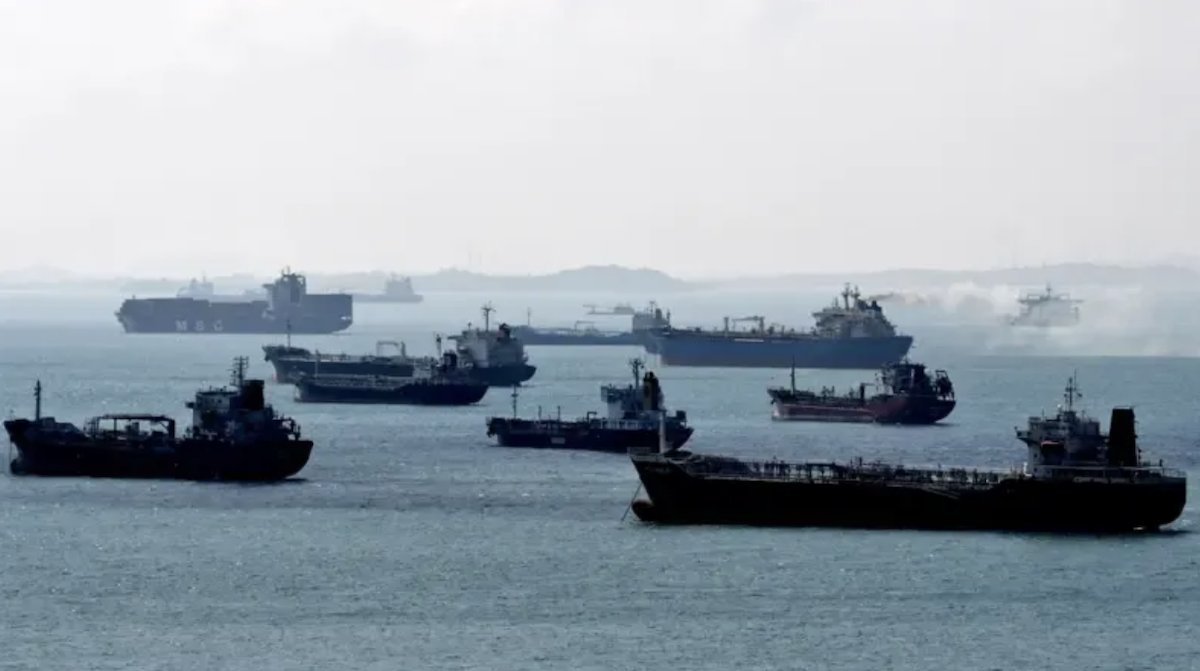
The outlet iFact has published an investigation claiming that 19 vessels believed to be part of Russia’s so-called “shadow fleet” called at Georgian ports in 2024 and 2025.
According to the investigation, journalists spent two months monitoring ships entering the ports of Batumi, Poti and Kulevi before reaching their conclusions.
“During our observation, it was established that oil tankers arriving from Russian ports regularly switch off their automatic identification systems (AIS), falsify their coordinates and moor in open waters far from the coast while travelling along key oil transportation routes in the Black Sea,” iFact reported.
“Starting on 27 November 2025, we carried out systematic daily monitoring of Georgian ports — Batumi, Kulevi and Poti — and of all tankers transporting crude oil, petroleum products and chemical substances calling at these ports, using the tracking websites marinetraffic.com and globalfishingwatch.org as our main tools.
At the same time, we analysed port archive data to identify tankers that had previously entered Georgian waters. Vessels arriving in Georgia from Russia or from occupied territories of Ukraine were classified as suspicious,” the journalists said.
They added that they examined which flags the suspected vessels were sailing under, where they were registered, whether their names had changed, whether navigation systems had been switched off, whether the ships had international insurance, and which ports they had previously visited.
Additional information was obtained from the websites equasis.org and vesselfinder.com. Vessels meeting at least half of the listed criteria commonly associated with the so-called “shadow fleet” were classified by the journalists as belonging to that category.
What is the “shadow fleet”?
So-called “shadow fleet” vessels typically operate outside established international maritime regulations. They share a number of common characteristics:
- Old and substandard ships: Most of these vessels are more than 15 years old and often lack proper inspection regimes and regular maintenance.
- Opaque ownership: They are frequently owned by shell companies registered in offshore jurisdictions, making it difficult to identify the real owners.
- Lack of proper insurance: Such vessels usually operate without standard industry insurance, relying instead on small, unreliable insurers or sailing without insurance altogether.
- Flag manipulation: Operators regularly change a ship’s flag, registering vessels in countries with weak regulatory oversight — such as Gabon, Eswatini or Panama — or using falsified flag documentation.
The growing use of shadow fleet vessels has raised serious concerns within the international community for several reasons.
- Environmental risks: The use of ageing, poorly maintained and uninsured tankers significantly increases the risk of major oil spills. In the event of an accident, there are often no financial mechanisms in place to fund environmental clean-up or compensate for damage.
- Collision risks: By switching off tracking systems and transmitting false coordinates, these vessels pose a danger to maritime traffic and increase the likelihood of collisions on busy sea routes.
- Security threats: Some shadow fleet vessels are suspected of being involved in hybrid warfare activities, including espionage or the illegal transportation of weapons.
- Undermining sanctions: The scale of the shadow fleet — estimated to account for up to 20% of global oil trade — weakens the effectiveness of international sanctions regimes and regulatory frameworks governing the energy sector.
Russia’s shadow fleet
The post iFact investigation finds 19 ships calling at Georgian ports match criteria of Russia’s ‘shadow fleet’ first appeared on The South Caucasus News – SouthCaucasusNews.com.
35-year-old Shiva Rahimi was shot 6 times by the Islamic regime while delivering first aid to other shot Iranian anti-regime protesters on January 8th in Iran.
Rest in Peace Shiva. Iranians will never forget your sacrifice 💔🇮🇷
— Visegrád 24 (@visegrad24) Jan 28, 2026
The number of calls to the “Women Helpline Service” increased significantly over the past year. Rising from 1,623 in 2024 to nearly 4,000 in 2025, this 2.5-fold growth reflects the growing confidence women place in the available support resources.
The post Calls to “Women Helpline Service” surge 2.5-fold in one year first appeared on The South Caucasus News – SouthCaucasusNews.com.