
South Korea says US chip tariff to have limited immediate impact reut.rs/4qt1l2t reut.rs/4qt1l2t
— Reuters (@Reuters) Jan 17, 2026
Day: January 17, 2026
🔊 The US incursion into Venezuela and threats over Greenland have made clear Trump’s intent to rule by world-spanning whim. In the latest Viewsroom podcast, @Breakingviews columnists debate the logic of belligerence and what it means for historic allies reut.rs/4r0sda1
— Reuters (@Reuters) Jan 17, 2026
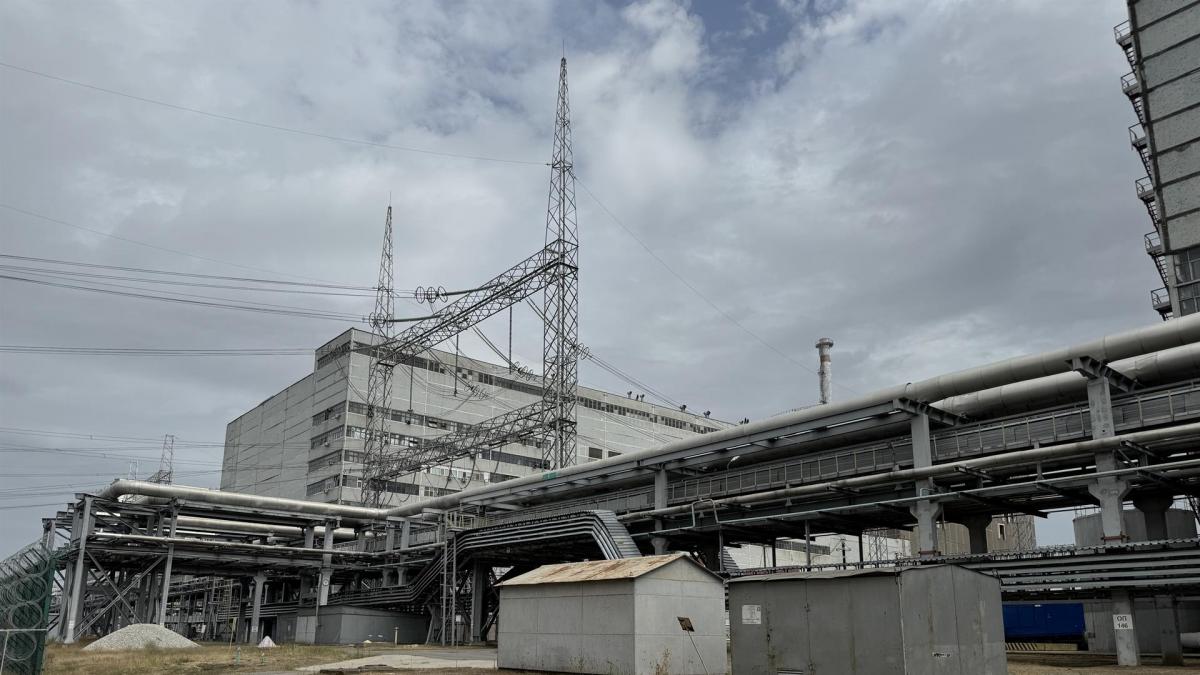
The International Atomic Energy Agency (IAEA) announced this Friday a temporary and local ceasefire agreement in the surroundings of the Zaporizhia nuclear power plant, the largest in Europe and in the hands of Russian troops since March 2022. The rapprochement aims to undertake the necessary repair
Longtime Democrat and former New Orleans Mayor Mitch Landrieu and conservative commentator Scottie Nell Hughes join NewsNation as new polling shows 58% of voters rate President Trump’s first year as a failure. At the same time, a veteran Democratic strategist is warning his party is on the wrong path.
Chris Cuomo hosts “CUOMO,” a no-nonsense show featuring the day’s most important news from all perspectives. “CUOMO” airs weeknights at 8p/7C on NewsNation. #CUOMO
NewsNation is your source for fact-based, unbiased news for all Americans.
More from NewsNation: https://www.newsnationnow.com/
Get our app: https://trib.al/TBXgYpp
Find us on cable: https://trib.al/YDOpGyG
How to watch on TV or streaming: https://trib.al/Vu0Ikij

Александр Галич, Галина Вишневская, Михаил Барышников, Мстислав Ростропович и Иосиф Бродский, 1974 г.
— Художники и Поэты (@Xudozhnikipoeti) Jan 17, 2026
Macron says Europe must develop its own intermediate-range ballistic missiles (IRBMs) like Russia’s Oreshnik or comparable long-range strike weapons.
Macron says Russia’s recent Oreshnik strike on Lviv is a “clear signal” and a demonstration that Europe is within range.
He stressed the need to accelerate efforts under the existing European Long-Range Strike Approach (ELSA) initiative, which was launched in 2024 by France, Germany, Poland, and later joined the UK, Italy, Sweden and the Netherlands.
Macron argues that developing these capabilities collectively will enhance Europe’s credibility, strengthen nuclear deterrence and respond to the shifting balance from Russia’s recent deployment of both nuclear weapons and Oreshniks in Belarus.
Macron argues that while it’s necessary to pool resources for European long-range systems rivalling the Oreshnik, France is capable to providing key technologies for the project through the know-how it has acquired by fielding S2/S3 IRBMs until 1996 and developing its own submarine-launched ballistic missiles (SLBMs) since the 1960s.
The Intermediate-Range Nuclear Forces (INF) Treaty, bilateral U.S.-Soviet agreement that banned all ground-launched ballistic and cruise missiles with ranges of 500–5,500 km in Europe, was in place between 1987 and 2019.
European NATO members (and the U.S. for its European deployments) adhered to this, avoiding new IRBM development or deployment.
The treaty collapsed when the U.S. withdrew in 2019 in response to Russia not adhering to the treaty by developing IRBMs and cruise missiles with 1000 km such as 9M729.
Macron has now made it clear that Europe’s mission to speed up its own IRBM and long-range cruise missiles must be sped up significantly. It remains to be seen whether Europe will heed his advice
Video
— Visegrád 24 (@visegrad24) Jan 17, 2026