Azerbaijan–US think-tank forum
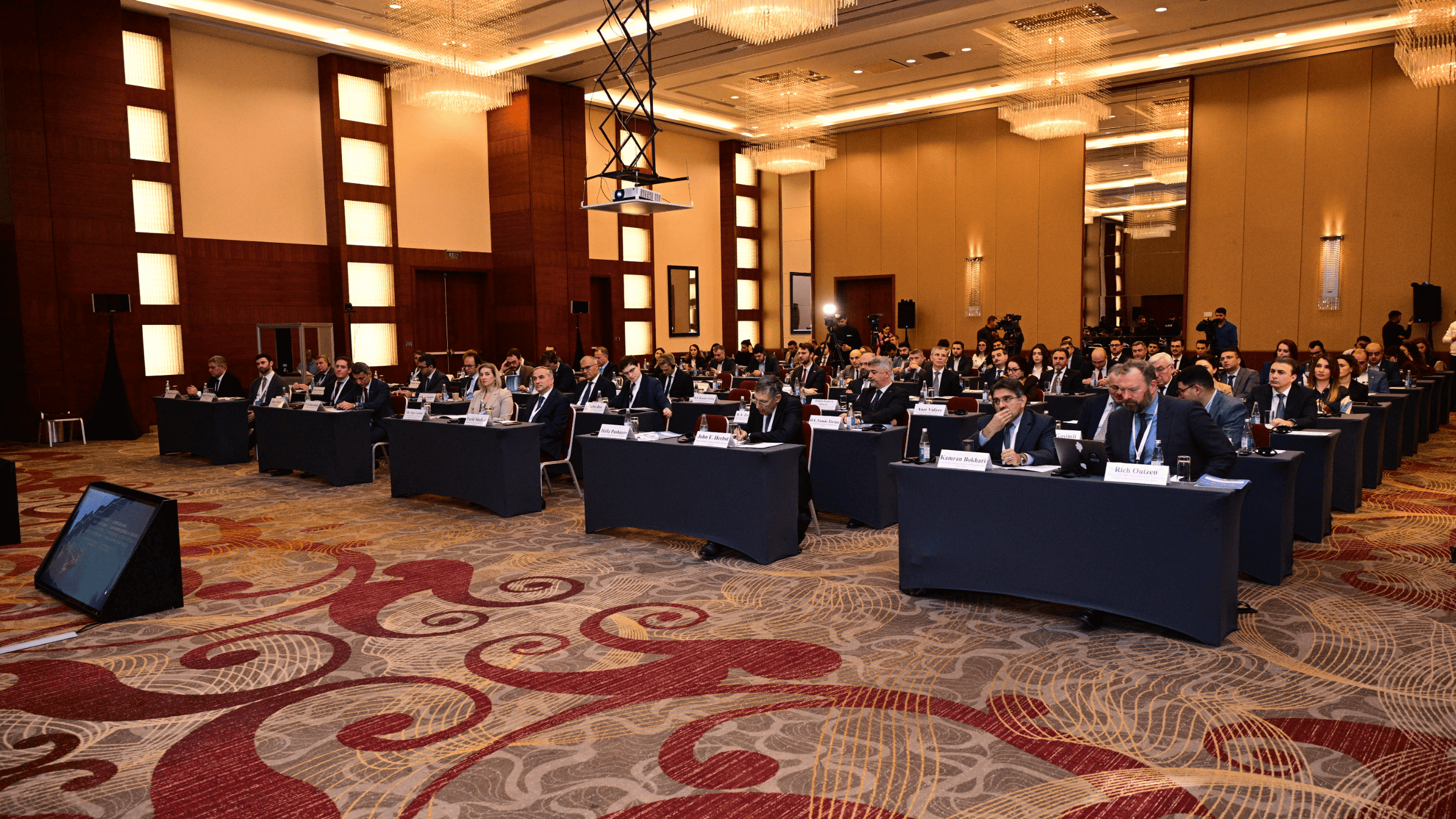
The first Azerbaijan–US think-tank forum took place in Baku under the theme “Shared Perspectives: Azerbaijan–US Dialogue for Strategic Partnership”, focusing on deepening strategic cooperation between the two countries.
The main organiser on the Azerbaijani side was the Center for Analysis of International Relations. The AIR Center is considered Azerbaijan’s leading think tank in the field of international affairs and initiated the holding of this forum.
To better understand the substance of the topics discussed at the event, this article also examines the institutional state of Azerbaijan’s think-tank sector and the actual level of the country’s analytical environment.
This commentary was prepared by a regional analyst. The terms, place names, opinions and ideas expressed reflect solely the position of the author or a particular community and do not necessarily coincide with the views of JAMnews or its staff.
Think tanks and government representatives
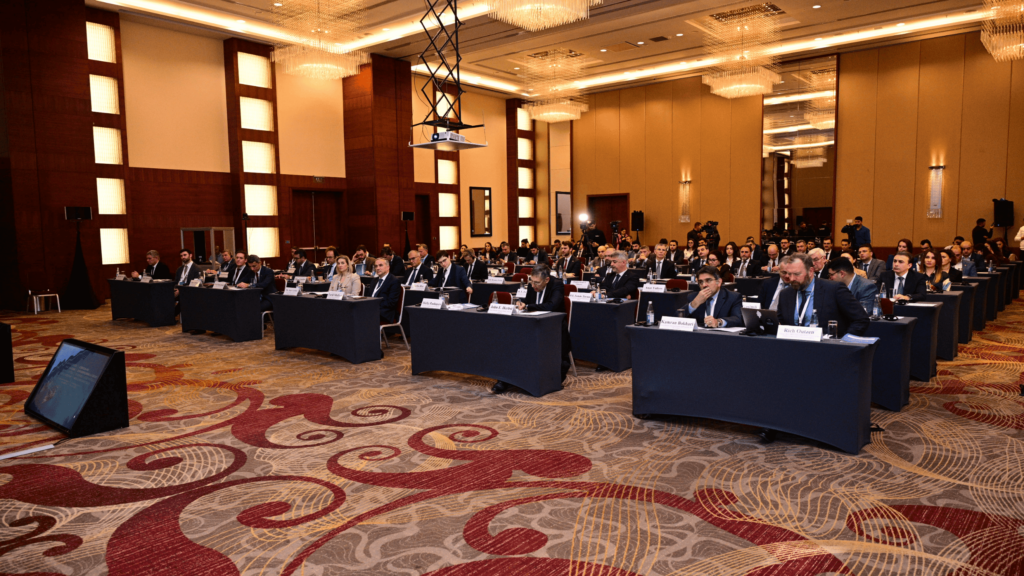
On the Azerbaijani side, the forum brought together government representatives, local think tanks, diplomats and experts. The event was led by Farid Shafiyev, Chairman of the Board of the Center for Analysis of International Relations. Local specialists also took part in the panel discussions, including ADA University Vice Rector Fariz Ismailzade and Farhad Mammadov, Director of the South Caucasus Research Centre.
American think tanks represented at the forum included the Atlantic Council, the New Lines Institute, the Hudson Institute, the Central Asia–Caucasus Institute, as well as contributors from The National Interest magazine.
Well-known figures from these organisations — among them John E. Herbst, Director of the Atlantic Council’s Eurasia Center, and Kamran Bokhari, New Lines Institute’s Director for Eurasia — participated in the discussions.
- Azerbaijani and Armenian NGOs in Yerevan: Dialogue for peace or a symbolic gesture? Views from Baku
- “Armenia and Azerbaijan join US AI projects as Georgia falls behind” — opinion
- Multipolar world: the US, China, Russia, SCO, BRICS and peace between Azerbaijan and Armenia
Agenda and discussion topics
The forum’s agenda covered several strategic areas. Three main panel sessions were held:
- Assessment of the outcomes of the Washington Summit – The first session examined the key political, economic and security-related results of the high-level meeting held on 8 August 2025 in Washington, as well as their implications for US–Azerbaijan relations.
- The peace process between Azerbaijan and Armenia (after the Washington Summit) – The second session focused on prospects for the South Caucasus peace process following the Washington meeting, including new opportunities and risks for a possible peace agreement between Azerbaijan and Armenia.
- Energy security and regional connectivity – The third session addressed issues of energy security and explored new regional transport and communication initiatives linking Central Asia, the Caspian region and Europe, as well as Azerbaijan’s role in this context. The session also included an exchange of views on public–private partnerships and the potential of international financial institutions to support the transition to green energy, “smart” logistics solutions and digital connectivity projects across Eurasia.
Forum objectives and expected outcomes
The main aim of the forum was to establish an institutional dialogue between think tanks from the two countries and to create conditions for regular exchanges of views. It was emphasised that this was not a one-off conference, but the foundation for a long-term cooperation platform.
The forum sought to produce research-based and evidence-driven analytical assessments and recommendations for various areas of Azerbaijan–US relations, involving experts and analysts with the capacity to influence policymaking.
The expected outcome of the event was to identify a roadmap for continuing this dialogue. According to political analysts, the first forum in Baku elevated the bilateral expert dialogue to a new official level and created an institutional basis for larger analytical conferences, joint projects and future research cooperation.
Experts note that the forum is not limited to discussing current issues; it also establishes practical mechanisms for cooperation between US and Azerbaijani think tanks in the near term.
Thanks to this event, leading think tanks from both countries sat down together for the first time in a direct and structured format, opening a new dimension of cooperation in bilateral relations.
Specialists say the forum reflects growing US interest in the South Caucasus and signals Washington’s intention to shift cooperation with Baku to a more structured model.
At the same time, observers note that the event aligns with Azerbaijan’s strategy to strengthen its “soft power” and analytical capacity. It is highlighted that Baku seeks to position itself not only as an energy and logistics hub but also as an international analytical platform bringing together global expert networks.

Critical perspective on the Azerbaijan–US think-tank forum
Although official sources present the first Azerbaijan–US think-tank forum in a positive light, understanding its real impact requires assessing it against the backdrop of the country’s existing analytical environment.
The institutional weakness of Azerbaijan’s think-tank sector, issues of financial transparency and the problem of analytical independence form an important context for evaluating the substance of the forum.
Structural constraints
Most analytical centres in Azerbaijan do not function as institutionally sustainable organisations. Research shows that many of them effectively operate as “one-person organisations”, with non-permanent, project-based teams.
The current analytical environment can broadly be divided into three groups: experts who have left the country; “old-school” researchers who have inherited Soviet-era approaches; and state-funded GONGO structures. In such an environment, it is difficult to produce independent, methodologically sound analysis capable of influencing public debate.
Post-Soviet legacy
Research indicates that one of the key factors shaping the current situation is that, after the collapse of the USSR, Azerbaijan did not adopt the Western model of think tanks. Institutions such as the National Academy of Sciences have for many years remained within the Soviet, state-centred framework.
In the 1990s, many NGOs seeking access to grants began operating under the label of “research centres”, but the lack of professional teams and analytical methodology led to the spread of the “one-person organisation” model. In such structures, analysis often amounted to repeating political positions and was not regarded by the state as expert consultation.
Funding and conflicts of interest
Research on think tanks connected to Azerbaijan has also attracted international attention. For example, the Swedish Institute for Security and Development Policy (ISDP), which in the same years received millions of euros in grants from Sweden’s Ministry of Foreign Affairs, was simultaneously funded by Azerbaijan — a situation that points to a long-term risk of conflicts of interest.
It also became known that between 2015 and 2018 the institute received funding from TEAS, a lobbying organisation linked to the Azerbaijani authorities. Studies indicating that TEAS was used to build loyal networks and influence the information environment in Europe further heighten questions about the nature of such funding.
These examples illustrate how sensitive the issues of financial transparency and analytical independence are within the think-tank sector, and highlight the need to consider the forum’s funding model within the same context.
Relevance of criticism
Against the backdrop of rapidly shifting geopolitical dynamics in the South Caucasus and continued tight domestic political control, questions remain as to whether events of this kind truly create conditions for genuine intellectual dialogue and independent exchanges of opinion.
The fact that most local think tanks are, in one way or another, linked to state structures — while abroad Azerbaijan’s lobbying activity is often criticised as “caviar diplomacy” — only deepens doubts about the objectivity of such platforms.
Despite the forum’s symbolic significance, the institutional weakness of the analytical sector, concerns over financial transparency and the lack of independent analysis may significantly limit its real impact.
To strengthen the effectiveness of this platform in future, key factors will include transparency of funding sources, broader participation by independent experts, and the development of sustainable analytical institutions free from government influence.
The post First Azerbaijan–US think-tank forum: participants, significance and criticism first appeared on The South Caucasus News – SouthCaucasusNews.com.


 (@Badgerboy71)